
Narrative RPGs
What Is a Narrative RPG? A Definition Without the Genre Soup
How choices, failure and character systems shape a narrative RPG, with examples from Disco Elysium, Undertale and Bangkok: City of Legends.
“Narrative RPG” is one of those useful game descriptions that becomes less useful every time a marketing department touches it.
It can mean a role-playing game where your choices reshape the story. It can mean a linear action game containing both dialogue and trousers. “Story rich” is broad enough to cover Disco Elysium and, presumably, a forklift simulator with an emotional ending.
A practical definition
A narrative RPG is a role-playing game where becoming a character and affecting their story are central parts of play.
The important bits are:
- You make decisions as a character rather than tactical decisions alone.
- The game tracks something about who that character is becoming.
- Characters, events or available choices respond to what you have done.
- Story is part of the game system, not a reward video shown between fights.
Combat can exist. So can levelling, equipment, dice rolls and an inventory containing fourteen kinds of root vegetable. They are not what makes the game narrative-led.
The game should let you decide who the character becomes and remember those decisions.
A strong story is not the same as role-playing
A game can tell a brilliant, completely linear story. You follow the same character through the same events and reach the same ending. That is a story-driven game, but the player may have little authorship over the role.
A fixed story can have better pacing, stronger character arcs and fewer endings where the villain delivers half a sentence because the player killed the wrong shopkeeper twelve hours earlier.
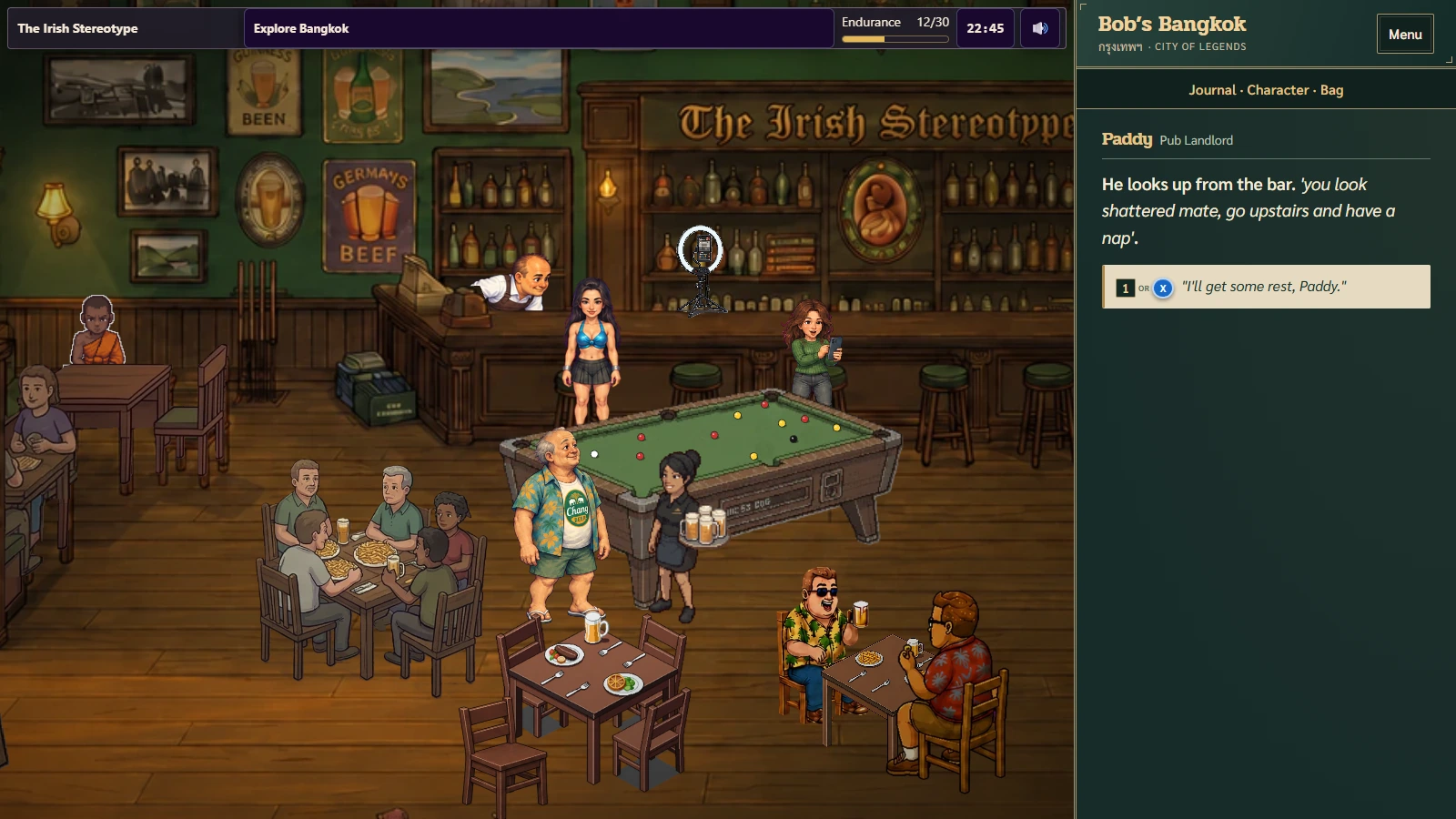
In a narrative RPG, your version of the protagonist should differ from somebody else's in more than armour colour and damage per second. Perhaps you are compassionate, corrupt, cowardly, loyal, suspicious, charming or banned from a noodle shop. The game needs to notice enough of those decisions for the role to feel authored through play.
Choices do not need to split the entire plot
Draw every meaningful choice as a separate branch and the writer will soon be found crying beneath a diagram containing 4,096 endings.
That is one method. It is also a good way to bankrupt a small studio.
A choice can matter without producing a different final boss. It might change:
- how a character speaks to you;
- which information they trust you with;
- whether a faction helps or obstructs you;
- what your character believes about an event;
- which solution appears later;
- the cost of succeeding;
- the meaning of the same ending.
The consequence needs to be felt, not necessarily announced by a banner saying PLOY WILL REMEMBER THIS.
Some of the best narrative choices are small. You lie to make somebody feel better. Ten minutes later they repeat the lie to somebody who knows the truth. No kingdom explodes. You simply have to remain in the room while your own words come back wearing shoes.
Failure should leave a mess
Traditional game design often treats failure as a closed door. Your number was too low, so you do not get the thing. Reload, grind or leave.
Narrative RPGs can let you fail forwards.
A failed check may reveal the wrong information, damage a relationship, attract suspicion or solve the immediate problem at a worse price. The story continues, now carrying the evidence of your incompetence.
In Disco Elysium, failure is frequently characterisation. A disastrous attempt can tell you more about your detective than a clean success.
It also makes role-playing less timid. If every bad roll deletes progress, players optimise the humanity out of their choices. If failure produces new scenes, being terrible at something becomes material.
Stats should change the story, not sit beside it
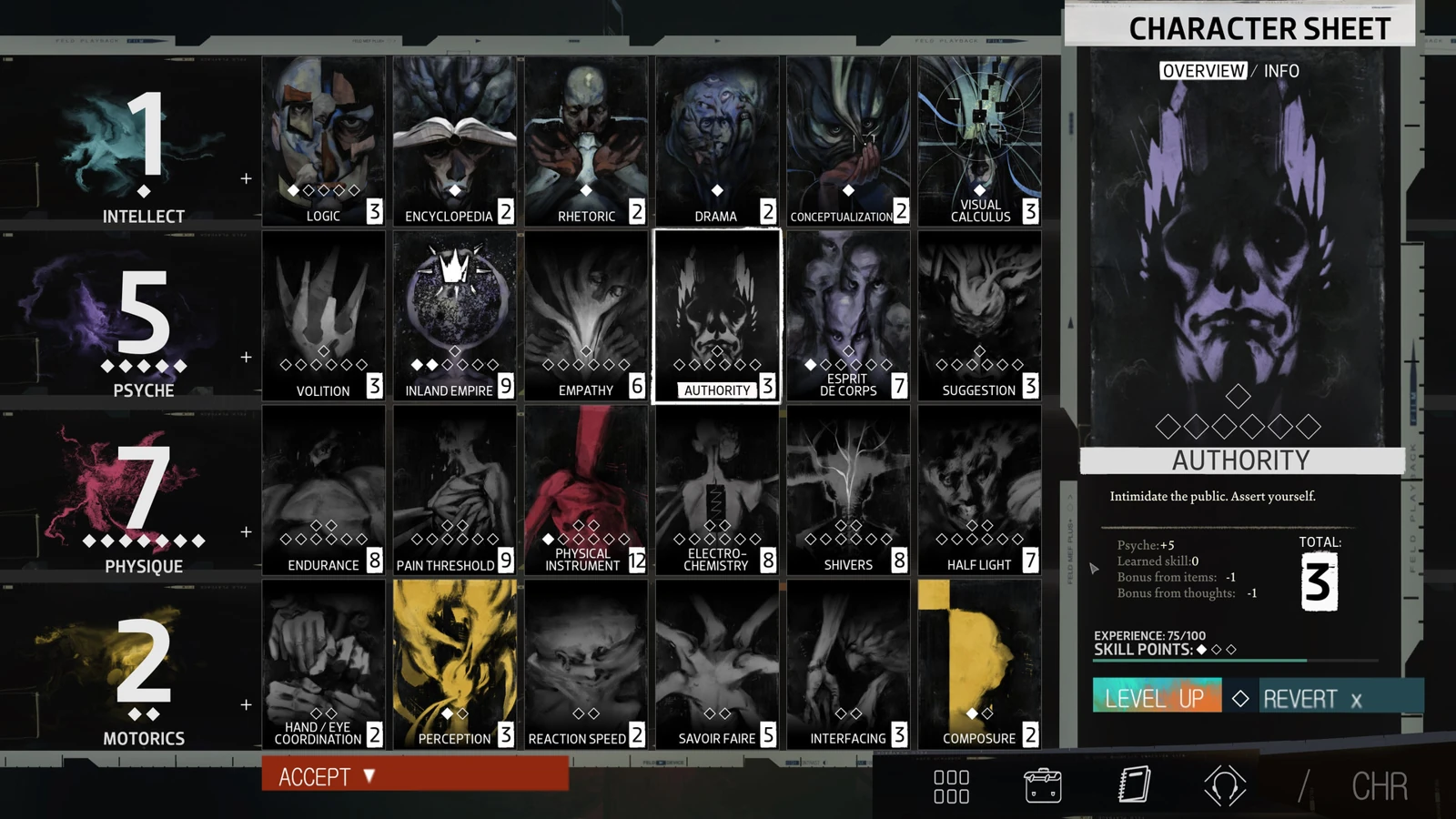
RPGs enjoy numbers. Strength 8. Empathy 3. Charisma 14. Forty-seven cabbages.
In a narrative RPG, those numbers should alter what the character perceives, attempts or understands.
A high empathy score might reveal that somebody is frightened rather than angry. High local knowledge might identify which uniform is genuine. A terrible reputation might close the polite option but open a much faster conversation with somebody who likes bastards.
The best systems do not reduce every choice to “good stat opens good answer.” Strength can make intimidation possible and make a peaceful character distrust you. Charm can rescue a conversation or help you construct a lie that becomes expensive later.
Stats become narrative when they produce a different version of the scene, not merely a 6 percent discount on swords.
Narrative RPG, visual novel or interactive fiction?
The borders are untidy because games ignore filing systems.
Visual novels
Visual novels usually present text, character art and choices, with the story doing most of the mechanical work. Some are linear. Others branch wildly. Add persistent stats, inventories, relationships or character builds and the overlap with narrative RPGs becomes large.
Interactive fiction
Interactive fiction includes parser games, where you type actions, and choice-based stories, where you select from written options. Some contain little traditional RPG progression. Others track enough state to resemble an RPG made mostly from sentences.
Choose-your-own-adventure games
This is the familiar branching-book structure: make a choice, move to a different section, discover that trusting the wizard was administratively unwise. Digital versions can track far more than a book, but the phrase often implies choices and branches without deep character systems.
Narrative RPGs
Narrative RPGs combine authored story with role-playing systems. Choices affect the plot, but stats, possessions, relationships, knowledge and reputation may also determine which choices exist.
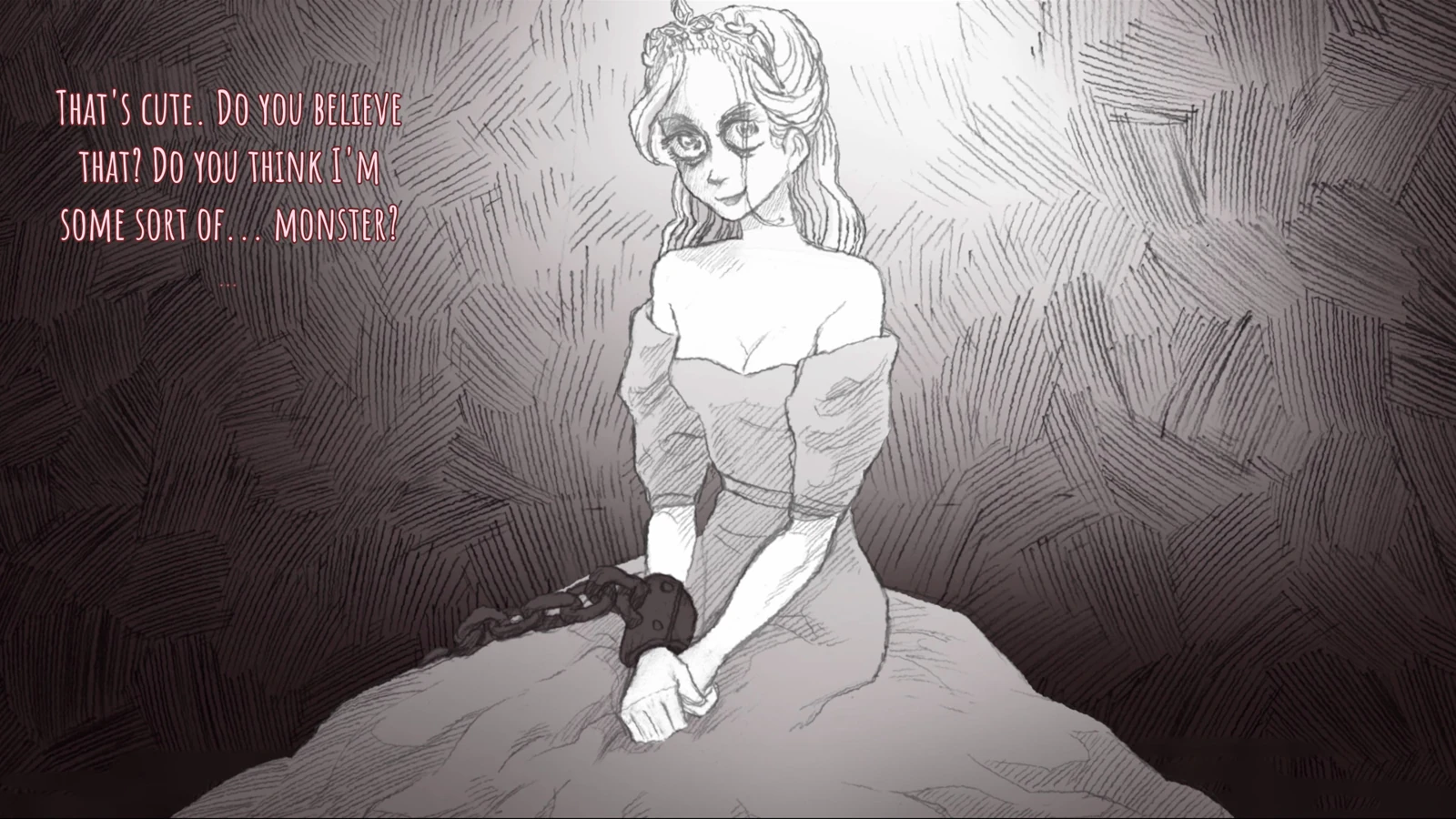
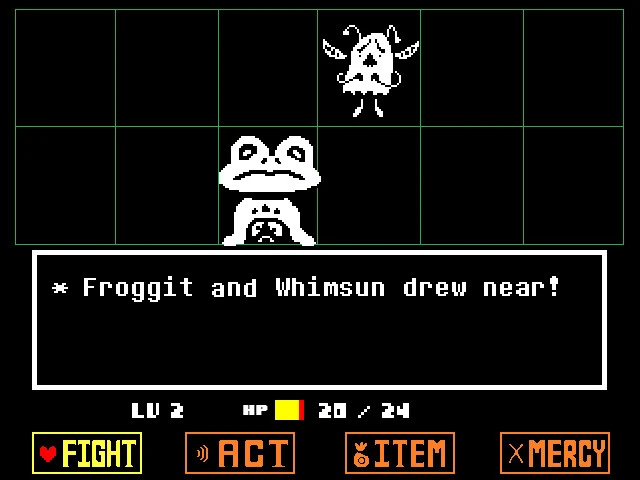
None of these categories owns a fenced compound. Slay the Princess describes a branching story shaped by what you say and believe. Undertale lets you spare enemies, then remembers what you decided. Both make the player responsible for the meaning of the story, even when genre clerks disagree about the label.
What meaningful choice is not
It is not three dialogue buttons that say:
- Yes.
- Yes, sarcastically.
- Yes, but I am wearing a hat.
A morality meter where feeding an orphan adds ten blue points and stealing their shoes adds ten red ones needs consequences beyond the score. Saving every consequence for a slideshow after the game ends leaves little for players to respond to during play.
Players notice smaller reactions, too. A changed greeting, a missing invitation or an NPC using your own excuse against you can make a world feel more responsive than another burning city.
Meaningful choice requires context, uncertainty and consequence. The player needs a reason to care, incomplete enough information to make the decision interesting, and some later evidence that the decision entered the game rather than falling behind the sofa.
Why Bangkok suits a narrative RPG
Bangkok is a city of overlapping systems. Formal rules, personal relationships, money, family, status, reputation, language and spectacular improvisation all compete to decide what happens next.
That is much closer to an RPG than the postcard version of the city.
You can have the right paperwork and the wrong person. You can fail socially while succeeding technically. You can be treated as powerful in one room and completely irrelevant ten metres away. Knowledge matters, but so does knowing when not to demonstrate it.
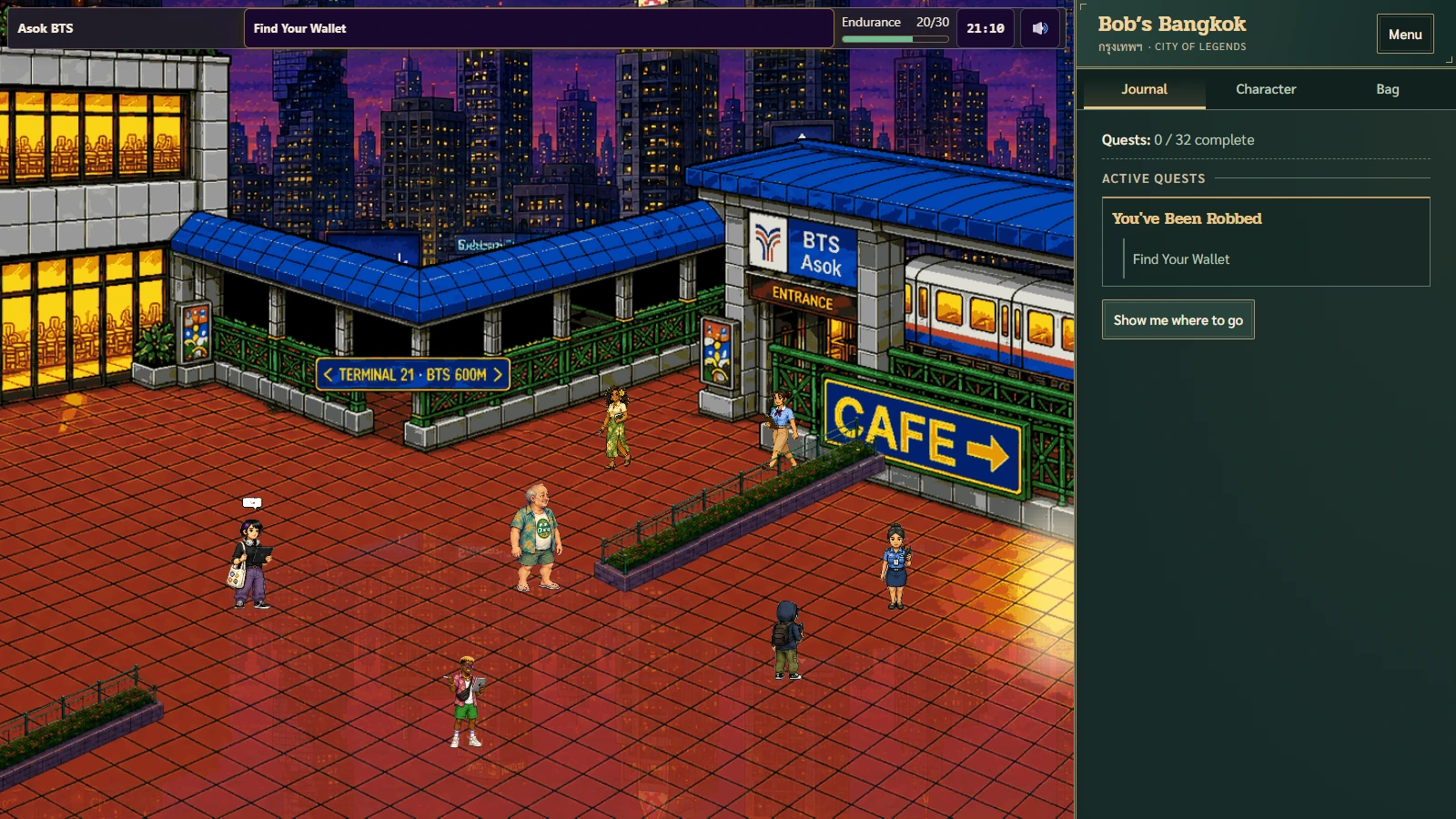
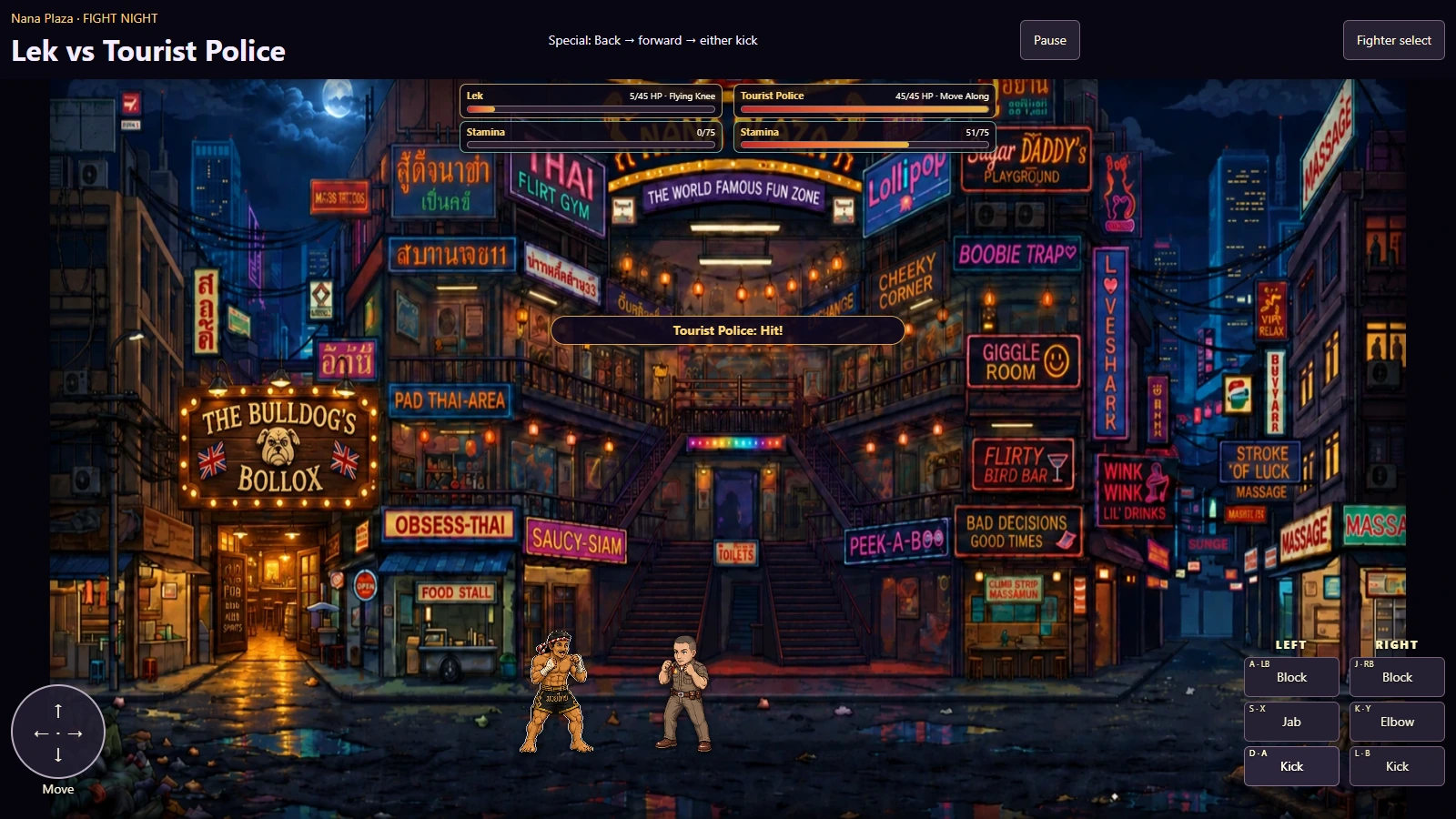
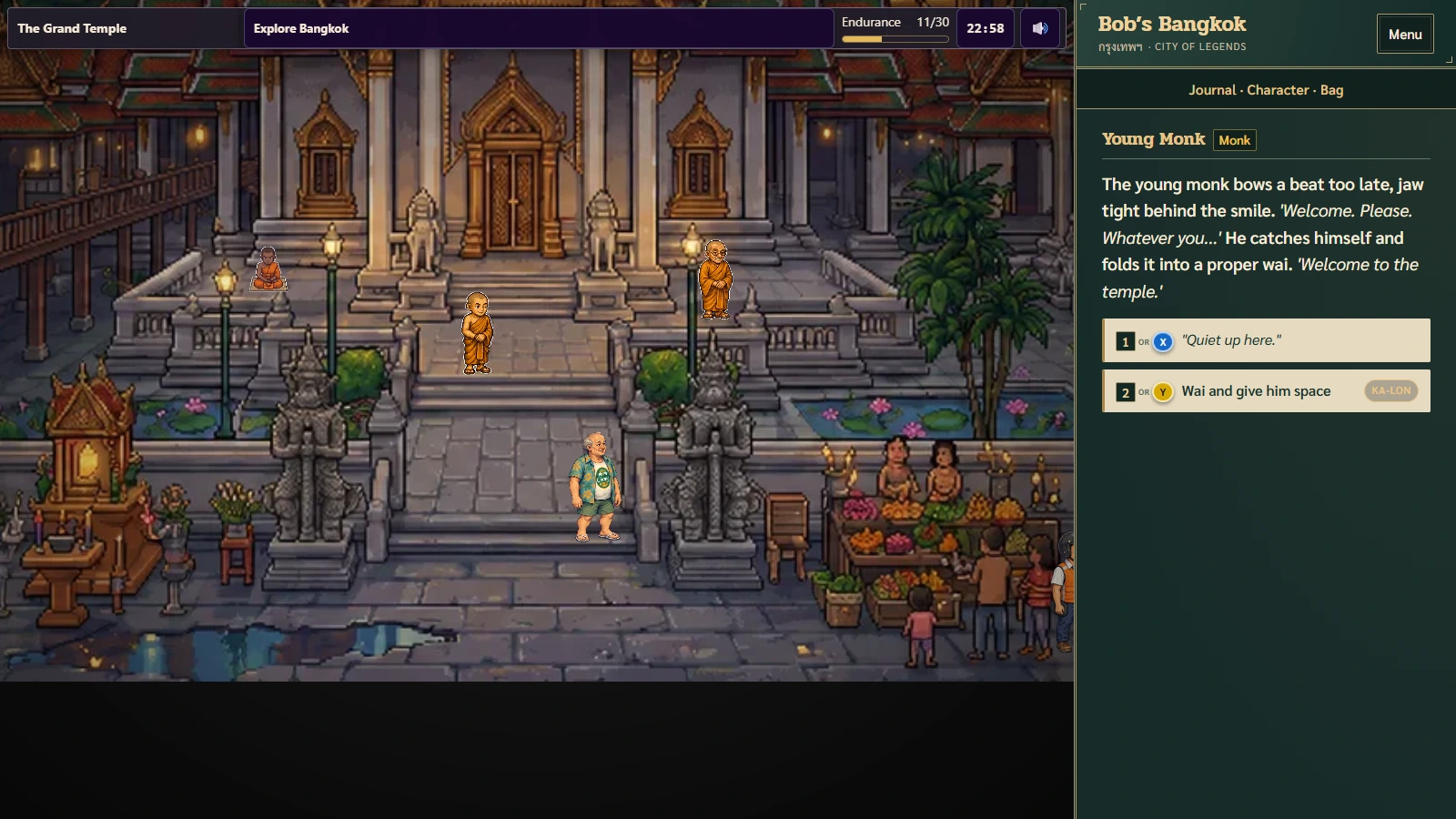
This is why Bangkok: City of Legends is a browser RPG and visual novel. It is now in beta, and the free demo is available to play. Dialogue, stats, items, quests, factions, karma, reputation and endings can all describe a city where progress depends on more than winning fights.
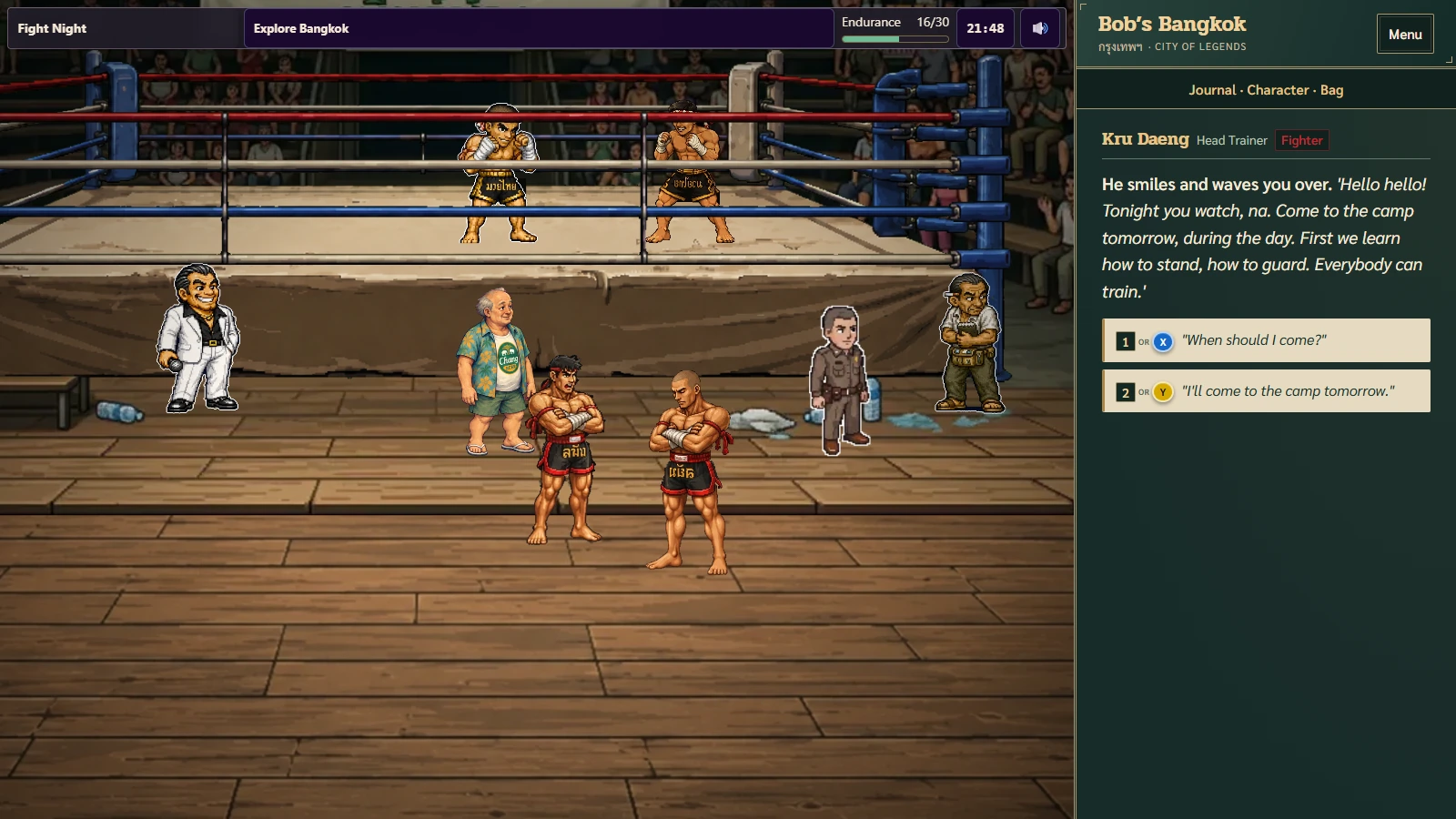
Its characters are voiced by comedians from Bangkok's comedy scene. The announced cast includes Eric, David Wor, Greg Andersen, Chris Cooke, Gary Miller, Pissara Prang, Ian Harvey Stone, Paul Wallis, the Toothless Truth Teller, Taksina, Sarayumi and Warren Gerdes. That is partly a crossover between the game and Bangkok Comedy, but it also suits this kind of RPG. Comedians spend an unhealthy amount of time thinking about voice, status, timing, what somebody is really saying and how quickly a conversation can become an avoidable disaster.
Play the free Bangkok: City of Legends demo. For more games built around writing and characters, see The Best Stories in Games You Can Play for Free.