
Games and Bangkok
Video games set in Thailand: what they get right and wrong
Thailand has long been such a fantasy destination that people just start making shit up.

Thailand has been the backdrop for so many movies and series (most recently The White Lotus). But relatively few games use Thailand. What do they get wrong, and which were the hardest geography fails?
This is a shorter list than most of them because I have used a punishing editorial standard known as checking.
What counts as a game set in Thailand?
I have split the list into four groups:
- Games where Thailand is the main setting.
- Games with a substantial chapter or mission in Thailand.
- Games with a Thai character or stage, not set here as a whole.
- Games with a fictional setting visibly built from Thailand.
That distinction matters. A Bangkok mission in a globe-trotting Bond game is worth mentioning. It does not make the whole game a rich exploration of Thai society any more than changing planes at Suvarnabhumi makes you an anthropologist.
Each entry gets a verdict. The sources are linked for anybody who wants to fight about it.
Games mainly set in Thailand
Home Sweet Home
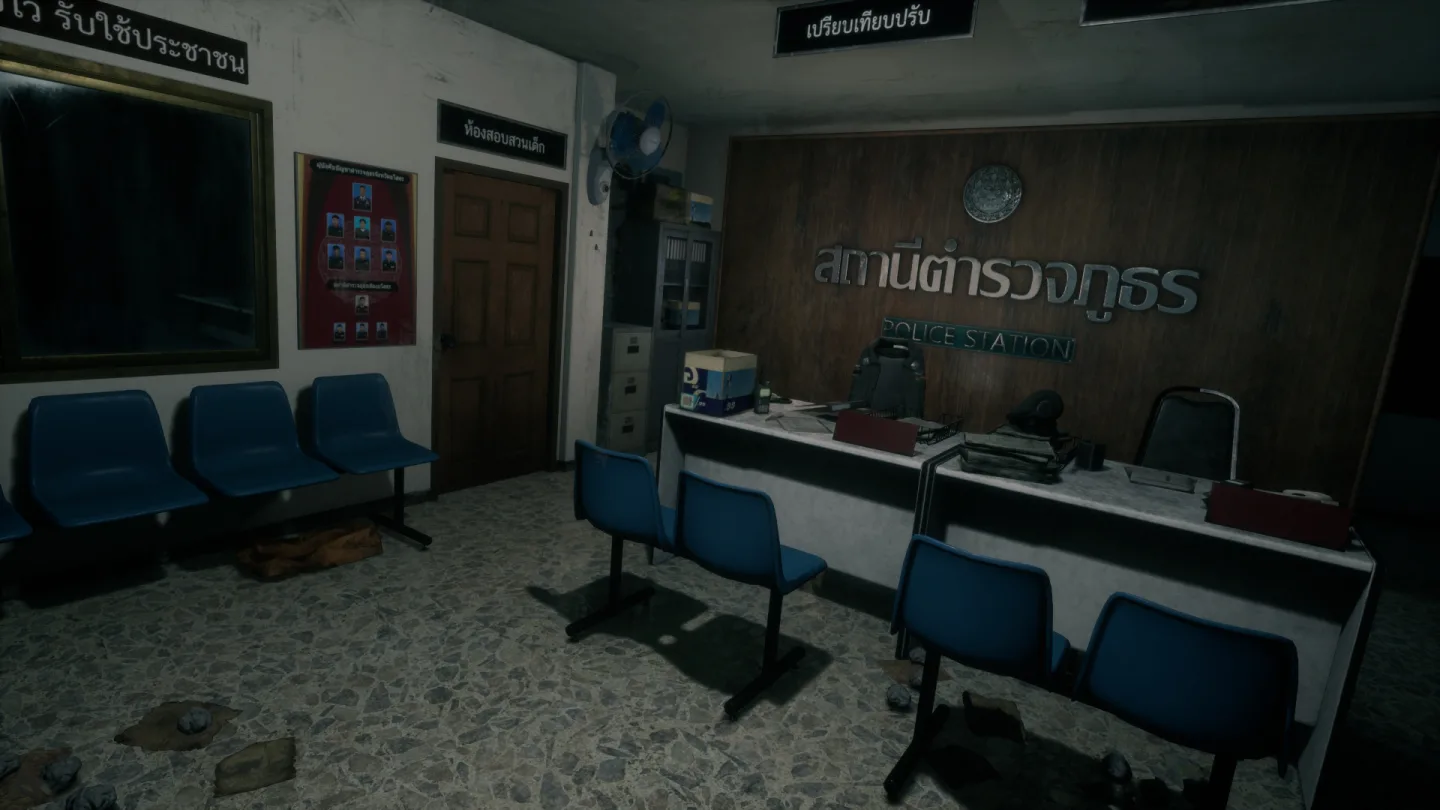
Home Sweet Home is a first-person horror game built around Thai myths and beliefs. You play Tim, whose search for his missing wife rapidly becomes less of a domestic disagreement and more of a supernatural workplace safety violation.
The setting is not sold as a tourist's checklist of real Bangkok landmarks. Its Thai identity comes through the spaces, spirits, religious ideas and ordinary objects that make the horror feel local. That is more interesting. Bangkok landmarks are not the only way a game can feel Thai.
The game comes from Thai developer YGGDRAZIL Group. If what you want is horror that could not be moved to suburban America without ripping out its organs, start here.
This is the strongest cultural portrayal on the list. A 2024 study by Thai university researchers identified culture-specific material across its ghosts, rituals, religious ideas, objects and locations. A Thai cultural analysis also picked out black magic, karma, preta and Thai instruments in the score.
The weak point is what survives translation. The study found that the English version often replaces Thai terms with broader language or removes them. International players get a blander, less precise version of the culture. An English-language review reached the predictable result: without prior knowledge, parts of the game read as generic Asian horror. The game assumes you understand the Thai material while its translation quietly deletes part of the explanation.
Bangkok Story: A Stray Dog
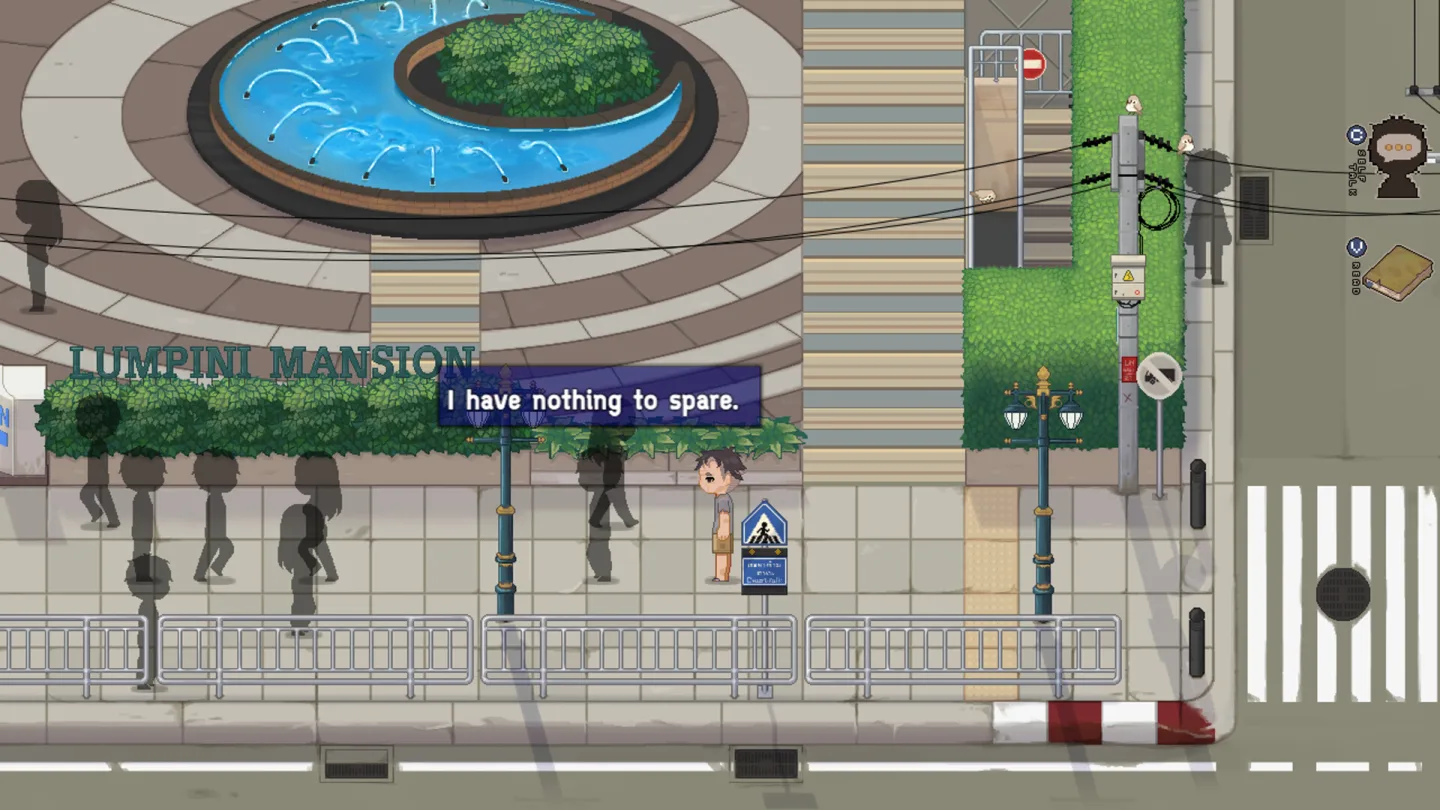
Bangkok Story: A Stray Dog is the clearest answer to the question. It is actually set in Bangkok, says so on the box, and does more with the city than use a temple as decorative wallpaper.
Released in April 2026 by Bangkok studio Shameful Guys Development, it follows a formerly homeless man telling his life story to a stray dog. The story moves through Bangkok in 2017 and rural Thailand, with mental health, poverty and personal responsibility running through it.
It is a top-down story adventure with RPG and visual novel elements. It also has English and Thai text, which should be a basic detail for a Thai game but is still pleasant enough to mention.
What it gets right is unusually well documented. The creator based its Bangkok maps on the Sathorn streets around his former workplace, using his own visits, Google Maps and local video. A Thai GamingDose review praised the Sathorn and Chiang Rai backgrounds. GamingDose also identified the game's smartest decision: repeatedly asking strangers for money makes the player's social invisibility part of the game.
The same review found a less convincing detail in the dialogue. Modern slang and chat-like endings appear in an older man's memories of Chiang Rai in 1982. The places feel observed. Some of the period voices do not.
See Bangkok Story: A Stray Dog on Steam
ARAYA
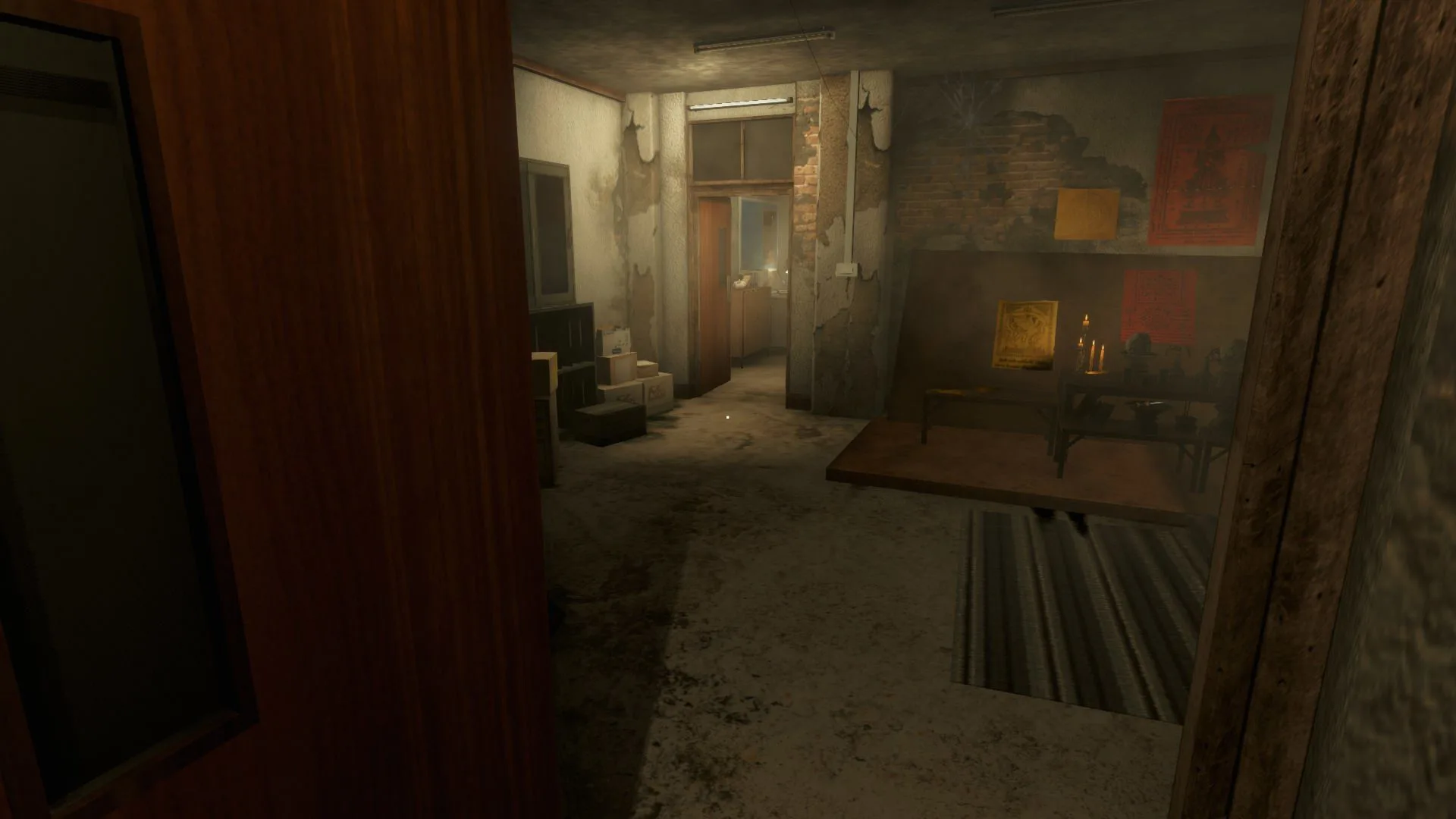
ARAYA is another Thai horror game, this time set in a hospital and told through three characters.
Hospitals are already buildings where bad lighting, administrative confusion and the fear of receiving a bill have done most of the level design. ARAYA adds a murder investigation and whatever is waiting in the dark corridors.
It was developed by Bangkok-based MAD Virtual Reality Studio and can be played normally or with a VR headset. The official description is unusually clear about the location: it is a Thai hospital, not a vaguely Asian medical facility assembled from stock incense.
The developers photographed a real hospital and rebuilt details such as its green waiting chairs, signs, stickers and writing on the walls. In Thai interviews, they said these were the things local players recognised immediately. They also tested with Thai and Western players because the two groups did not always fear the same things.
That ordinary detail is its most convincing work. Its limit is that an abandoned hospital is already a global horror-game language. A player in a Thai community discussion gave the blunt version: ARAYA puts Thai names, language and signs inside an otherwise familiar hospital horror game. Correct. The furniture is local; the nightmare has travelled.
Bangkok Knights
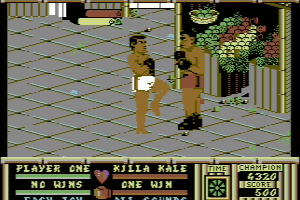
Thailand was getting people punched on the Commodore 64 long before anybody rendered a luxury Bangkok hotel. System 3's Bangkok Knights came out in 1987, a one-on-one Thai boxing game whose setting is more specific than the title alone suggests.
The original cover description, preserved by Lemon64, sends you from a village cliff through jungle and Bangkok's streets to Lumpini stadium. That earns it a place among games mainly set in Thailand. The destination and the sport belong together; Bangkok is the endpoint of your fighting career, not a random label under a palm tree.
The limit is the cartoon fighting wrapped around that premise. Lemon64's retrospective review praises the huge, nimble fighters but describes bouts sliding into button mashing and a special attack that squashes your character like an accordion. This is Thailand as an arcade boxing adventure. Any claim to a serious Muay Thai simulation ends when somebody compresses your spine for a joke.
A fictional island built from Thailand
Billy the Hero
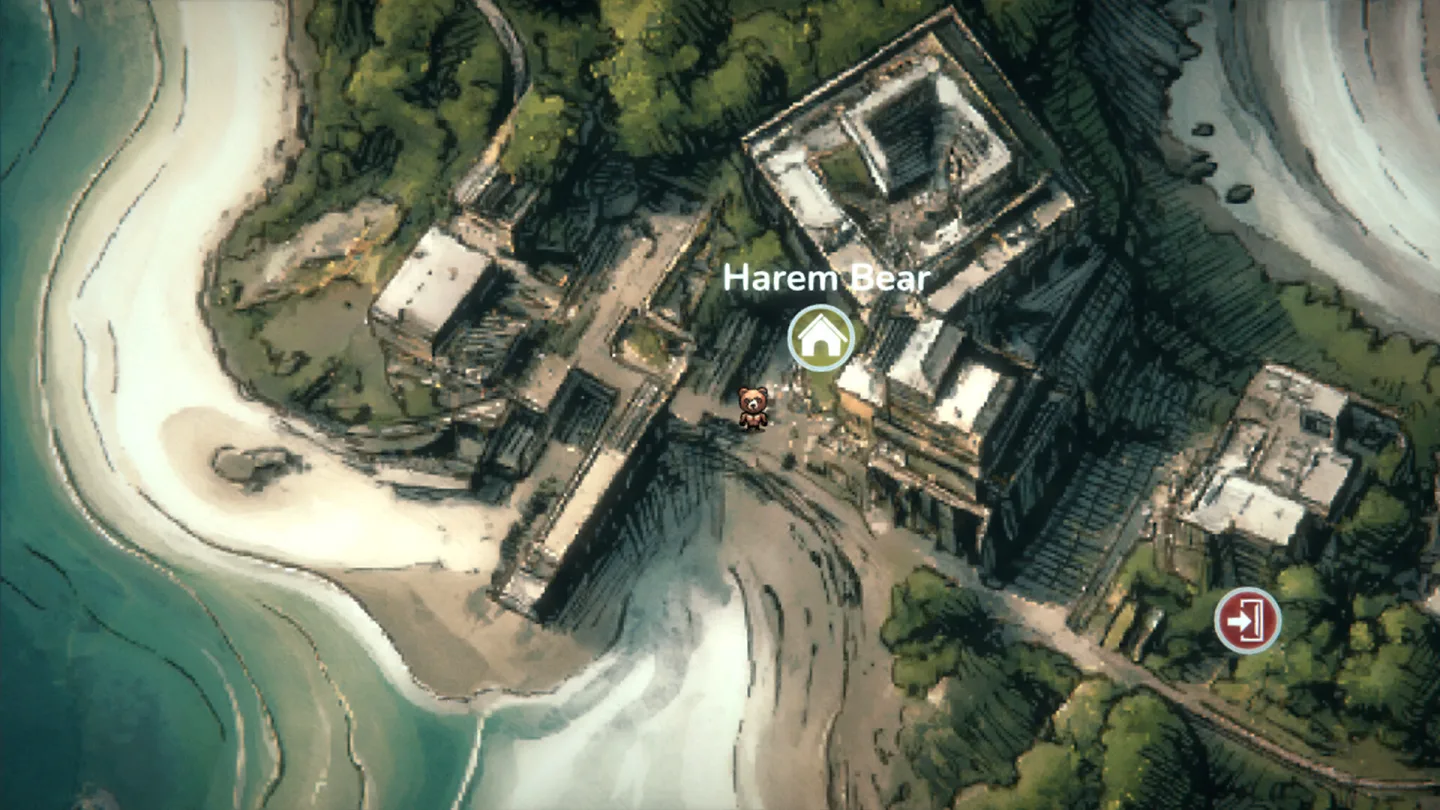
Billy the Hero is an upcoming dark-fantasy RPG from Thai indie team JOJOJOJOsoft. Billy wakes on the fictional Hell Island with no memory and the body of a muscular bear, then starts recruiting monsters, building a city and behaving like the world's worst criminal because that is what he was before the amnesia made introductions difficult.
Hell Island is fictional. Its visual DNA is Thai. The beaches, palms, timber huts and open coastal settlement draw from Thailand so clearly that excluding it on a technicality would be daft. The Steam page does not give the island a real address, and it does not need one. This is a Thai fantasy setting built from local scenery.
The game was written in Thai first, and its creator says Thai players will understand more of the dialogue, social satire and current political context. Thailand is in the scenery, the language and the jokes. It belongs here.
The development story became more famous than the setting in July 2026. Krichanont Songpracone photographed his sleeping wife from several angles, cut up the pictures of her face and hands, and turned them into a three-headed boss guarding the wedding ring. He joked that the monster had taken 20 years to make because that was how long the relationship had been incubating. Thai games media documented the process, and the story travelled internationally because apparently marital survival is now a development milestone.
He is routinely described as a solo developer. His own interview says the core team has two or three people. Songpracone creates the assets, characters, scenes, script, effects and marketing, an intern handles programming, and a separate group makes the music. He is doing an unreasonable amount of it himself. The game still has a team.
Games with a substantial Thailand mission or chapter
HITMAN: the Bangkok mission
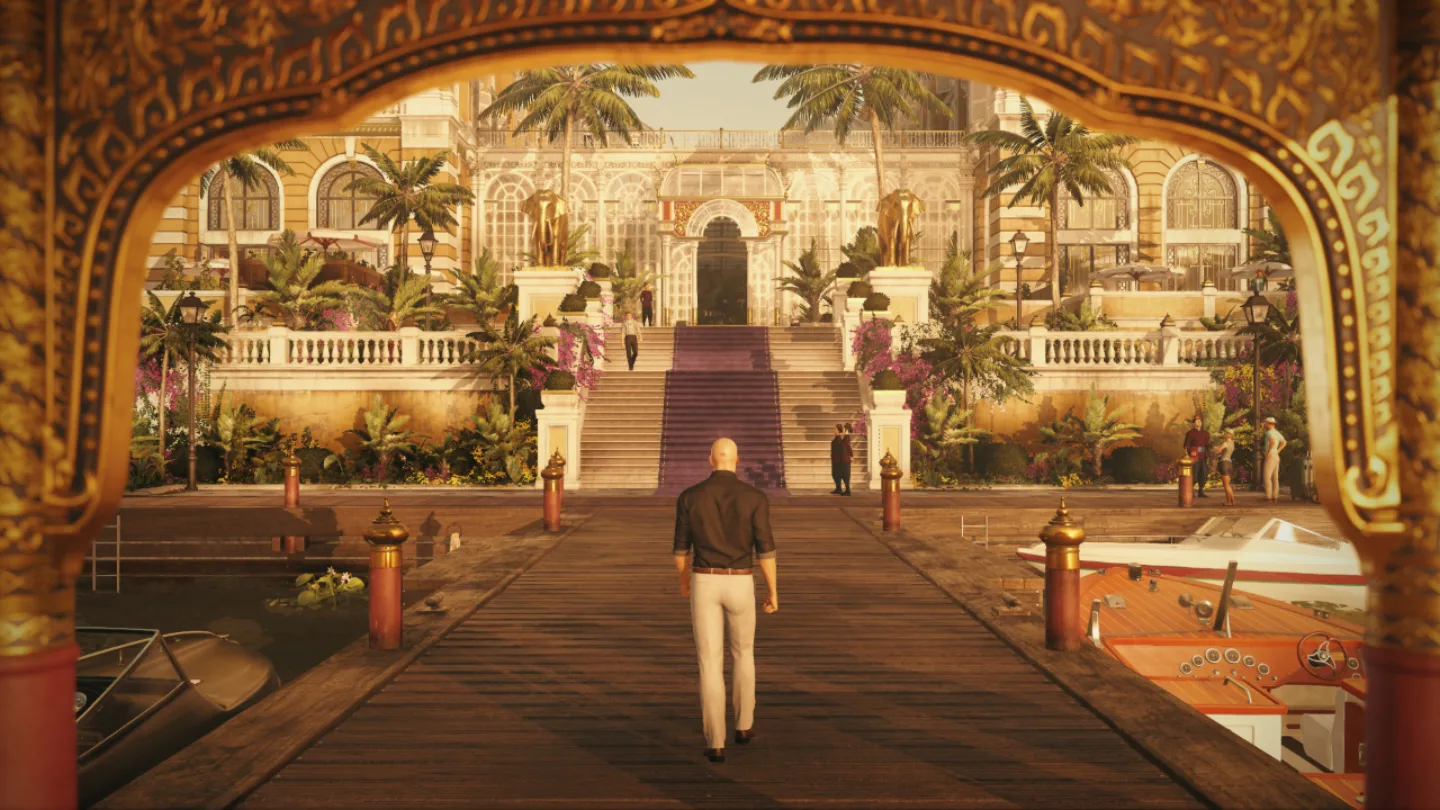
The fourth episode of 2016's HITMAN sends Agent 47 to the fictional Himmapan luxury hotel on the Chao Phraya River outside Bangkok.
The mission, Club 27, gives you a hotel, tropical gardens, recording studios, rock-star entitlement and dozens of ways to turn hospitality equipment into a murder inquiry. It is not an entire Thailand game, but Bangkok is a proper sandbox rather than a loading-screen layover.
The hotel is fictional. The wealth, river view and badly behaved foreign musician are more plausible.
A Bangkok resident identified the recognisable pieces of the city. The temple resembles Wat Arun, the hotel recalls the Mandarin Oriental and a foreign musician recording at a Thai resort is perfectly believable.
The geography is nonsense. Bangkok does not have a beach and sailboats outside a quiet, isolated riverside hotel. The real shore is much more built up. The building also mixes Thai decoration with French-colonial styling from elsewhere in Southeast Asia. HITMAN captures luxury-Bangkok mood while maintaining an extremely relaxed relationship with Bangkok.
Read the official Bangkok episode announcement
Tomb Raider: Underworld
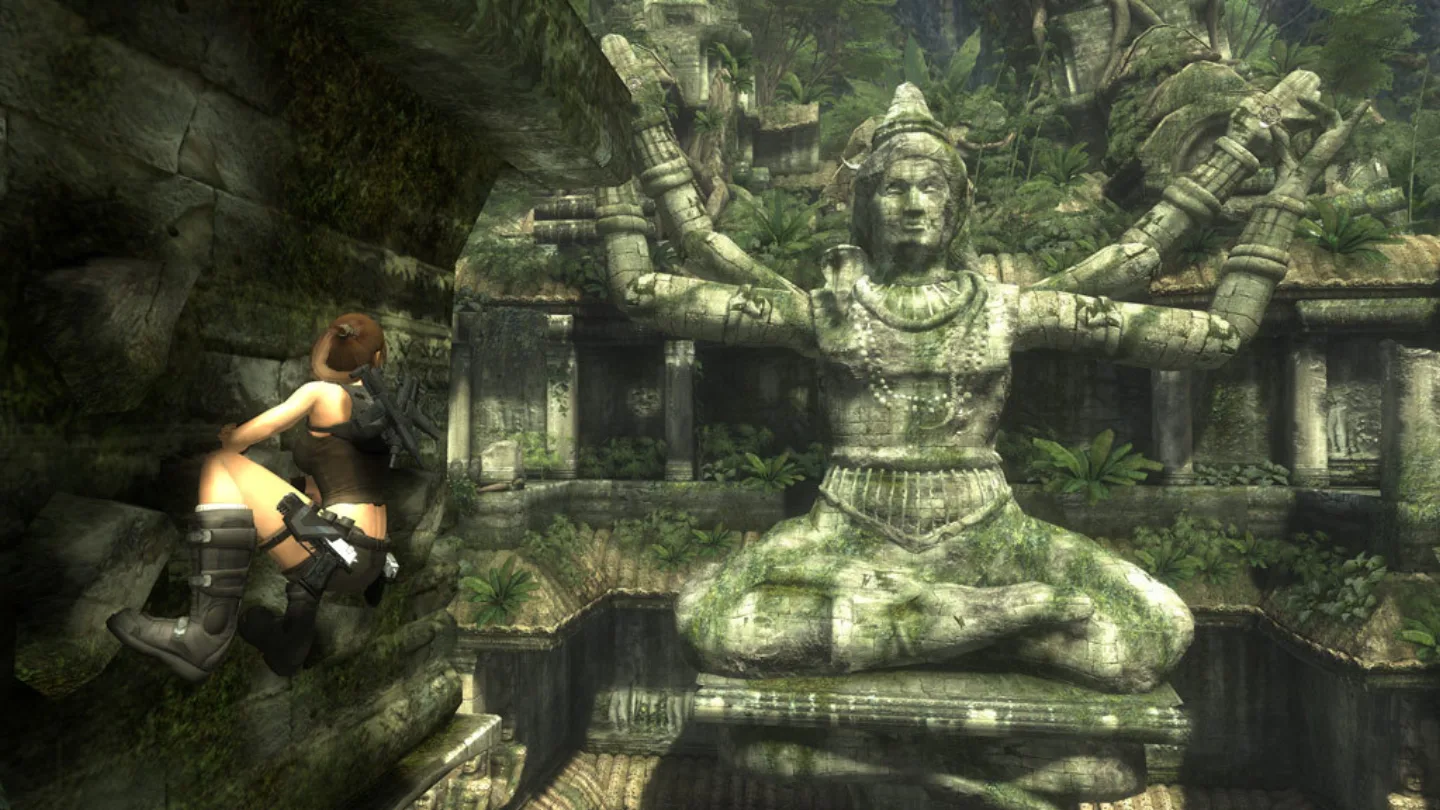
Tomb Raider: Underworld opens its wider archaeological tourism campaign with a coastal Thailand chapter.
Lara Croft explores ruins, climbs cliffs and damages cultural property while looking for a path into the Hindu underworld. The level is visually memorable, but it is one stop in a game that also visits Mexico, the Arctic and the bottom of the Mediterranean.
Include it in a list of games that visit Thailand. Calling the whole game Thai would be like calling Lara a responsible antiquities consultant.
At a distance, the southern coastline works. The sea, limestone cliffs and vegetation belong. Angkorian remains in Thailand also make historical sense because the Khmer Empire extended into parts of the modern country. Then the level stops being Thai. A detailed architecture comparison shows that its entrance closely copies Angkor Thom and Bayon in Cambodia, which is where the art director did the research.
The site then combines different architectural periods, impossible underground spaces and a Norse machine. It begins as plausible southern Thai geography, wanders into Cambodian visual borrowing and ends several storeys below the point at which history stopped answering its calls.
See Tomb Raider: Underworld on Steam
James Bond 007: Blood Stone
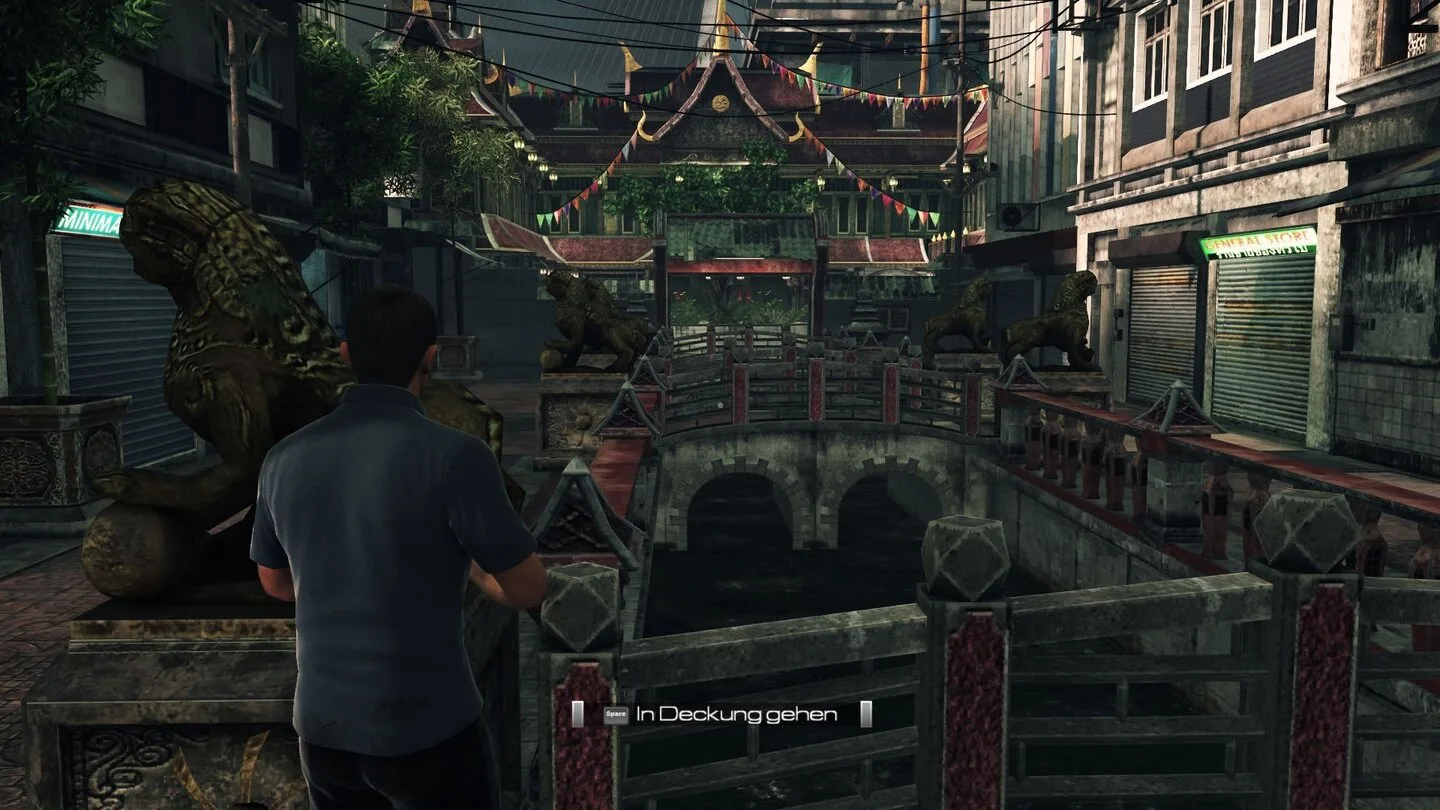
The 2010 Bond game Blood Stone travels through Athens, Istanbul, Monaco and Bangkok. Its Thailand section includes the usual Bond mixture of chasing somebody, shooting everybody else and leaving local insurers to sort out the consequences.
Bangkok is one stop on the game's international route, used as a backdrop for a chase.
The level contains rooftops, streets, market-like spaces, a pickup truck and a tuk-tuk dragged into a chase. Contemporary reviews discuss whether destroying a large piece of the city is enjoyable because the game has nothing to say about Bangkok beyond how many things Bond can crash into.
The verdict is Bangkok-flavoured Bond spectacle. The city is an obstacle course with a tuk-tuk attached.
Thai stages and characters that do not make the whole game Thai
Mario Kart: Bangkok Rush
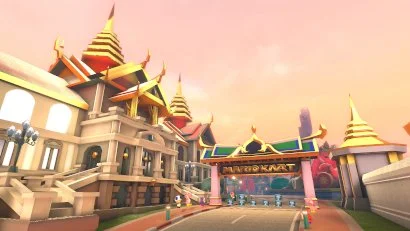
Bangkok Rush arrived in Mario Kart Tour in June 2022, then joined Mario Kart 8 Deluxe in Wave 4 of the Booster Course Pass in March 2023. A Bangkok racecourse absolutely counts here. It does not relocate the Mushroom Kingdom to Thailand.
The reveal got a warm welcome. BK Magazine, carrying Coconuts Bangkok's reporting, described Thai commenters welcoming Nintendo's characters to the country in June 2022. Some also used the occasion to ask where their Thai online store was. Being pleased to appear in a game apparently does not stop you asking to be treated as a customer.
Sanook's reveal coverage also described excitement among Thais and highlighted Daisy's Thai dress and the elephant-styled tuk-tuk kart in Tour. These are reports of enthusiasm around the reveal, not proof that every Thai player approved every detail of the finished course.
What it gets right is recognisability. Thai PBS picked out the Giant Swing, floating markets, BTS stations, Democracy Monument and a Ferris wheel. There is enough of the actual city in the scenery for Thai players to recognise particular places, rather than being asked to accept three temple roofs as an entire country.
The geography is more elastic. The Standard identified Wat Arun, the Chao Phraya and Maeklong's umbrella-folding railway market among the references. That last one is a real Thai place, but the Tourism Authority of Thailand places it in Samut Songkhram, not Bangkok. Nintendo has effectively annexed another province's tourist attraction to improve the lap.
My verdict: an affectionate, recognisable sightseeing collage with a loose relationship to the map. The welcome in the launch coverage makes sense. So does keeping it in the stage category. The traffic has at least found an honest visual language: everybody is trying to get past you and somebody has a weaponised shell.
Street Fighter: Sagat, Ayutthaya and “The King”
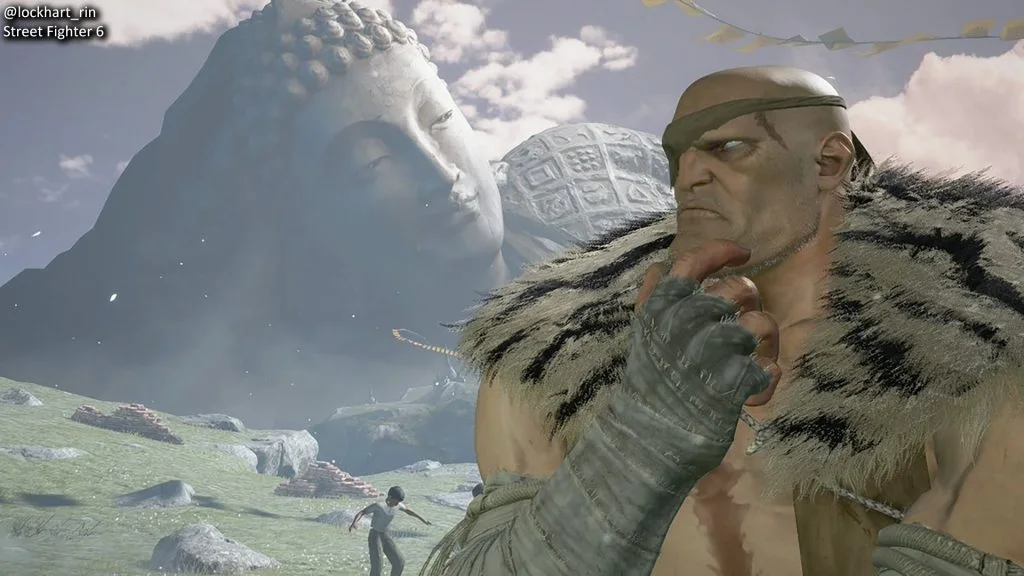
Sagat is Thai, lives in Thailand in Capcom's character material and has been associated with Thai stages throughout the Street Fighterseries. Street Fighter V also has a Thailand stage.
That earns the series a footnote here. It does not mean Street Fighter V is set in Thailand. Most of its cast are too busy flying around the world to punch one another beside national stereotypes.
Sagat's famous reclining-Buddha stage is not Wat Pho in Bangkok. It is based on Wat Lokayasutharam in Ayutthaya, particularly in Street Fighter Alpha 2, where the location is named Ayutthaya Ruins. The visual match is obvious: a huge white Buddha lying outdoors among the remains of an old temple. Wat Pho's Buddha is gold, covered in decoration and enclosed inside a hall. Bangkok has the more famous reclining Buddha, so people keep crediting the wrong one.
This is a good Thai reference. Capcom chose a real Ayutthaya landmark rather than gluing a Buddha onto generic jungle. It still turns a sacred image into exotic fight scenery, but at least it found the right country and city.
Sagat's knees, kicks, elbows and stance give him a recognisable Muay Thai base. They sit inside the body of an enormous scarred boss designed to communicate Thailand to an international audience in about two seconds. He gave Thai fighting visible representation by turning it into a broad, intimidating national caricature. There is no evidence that Capcom directly based him on real fighter Sagat Petchyindee beyond the shared name.
Capcom officially calls him both the “undisputed king of Muay Thai” and “The King”. The first title works in Thailand. Thai sports coverage usesราชันมวยไทย, or king of Muay Thai, for champions. The second is lazy localisation. Remove “of Muay Thai” and a sporting boast becomes a Thai man announcing that he is The King. That is precisely the sort of cultural detail an international publisher should notice before the audience does.
The clearest mistake came from a different Thailand stage. Street Fighter V's Temple Hideout is M. Bison's classic stage, not Sagat's. Its temple guardians and bell borrow the visual language of Bangkok temples, with Thai coverage comparing it to Wat Arun. The first release then placed Islamic chanting over the Buddhist setting. A Muslim player noticed, Capcom acknowledged the religious material, removed the stage temporarily and replaced the music.
Tekken 7: Fahkumram and the Cave of Enlightenment
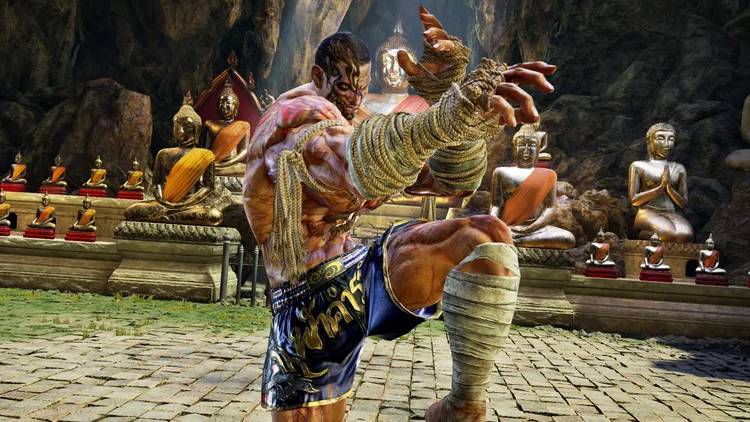
Bandai Namco introduced Thai fighter Fahkumram alongside the Cave of Enlightenment stage for Tekken 7. The stage uses Thai statuary and a dramatic cave because two people kicking each other in a branch of Boots would have lacked majesty.
Again, this is Thai representation inside an international fighting game. It belongs in the stage category, not at the top of a list about games set in Thailand.
Producer Michael Murray told Thai games media that the team wanted a genuine Muay Thai character and used Thai fighting contacts and motion capture. Fahkumram speaks Thai, and the stage resembles real Thai cave sanctuaries closely enough that photographs from Tham Khao Luang are immediately familiar to Tekken players.
The research is wrapped around deliberate nonsense. Murray admitted that Fahkumram's height was chosen because it looked cool. His lightning scars, prison physique and coerced military service are action-film biography, while the cave combines several Thai places instead of depicting one. Thai forum users even wondered whether the corrupt police and military story would cause local trouble. The fighting and scenery have real reference points. The man using them has the dimensions and personal history of an angry wardrobe.
Games that are not set in Thailand, regardless of what other lists claim
Sleeping Dogs
Hong Kong.
This should not require a committee meeting.
Far Cry 3
The Rook Islands are a blend of Thailand and Papua New Guinea, which is a great excuse to get the development team sent to both places on an all-expenses-paid holiday by Ubisoft.
Far Cry 4
Kyrat is a fictional Himalayan country shaped by Nepal, Bhutan, Tibet and the surrounding region. Thailand has many qualities. Being in the Himalayas is not one of them.
Uncharted: The Lost Legacy
India. Different country again.
These games may appeal to somebody looking for Southeast or South Asian settings. They are still wrong answers to a simple question.
Why are there so few games set in Bangkok?
Bangkok should be embarrassingly good material for games. It is dense, contradictory, theatrical and full of people running five different lives from the same phone. Every soi has its own minor economy, power structure and strange little king.
Instead, games often borrow the easiest images: temples, neon, tuk-tuks, kickboxing and a market where everybody apparently sells the same three fruits.
The more interesting Bangkok is the one people negotiate every day. Who knows whom. Who owes what. Which rule is real, which rule is decorative, and which rule becomes real when you irritate the wrong person. That is already an RPG system. Nobody needed to add dragons.
Honourable mention: Pattaya → Bangkok
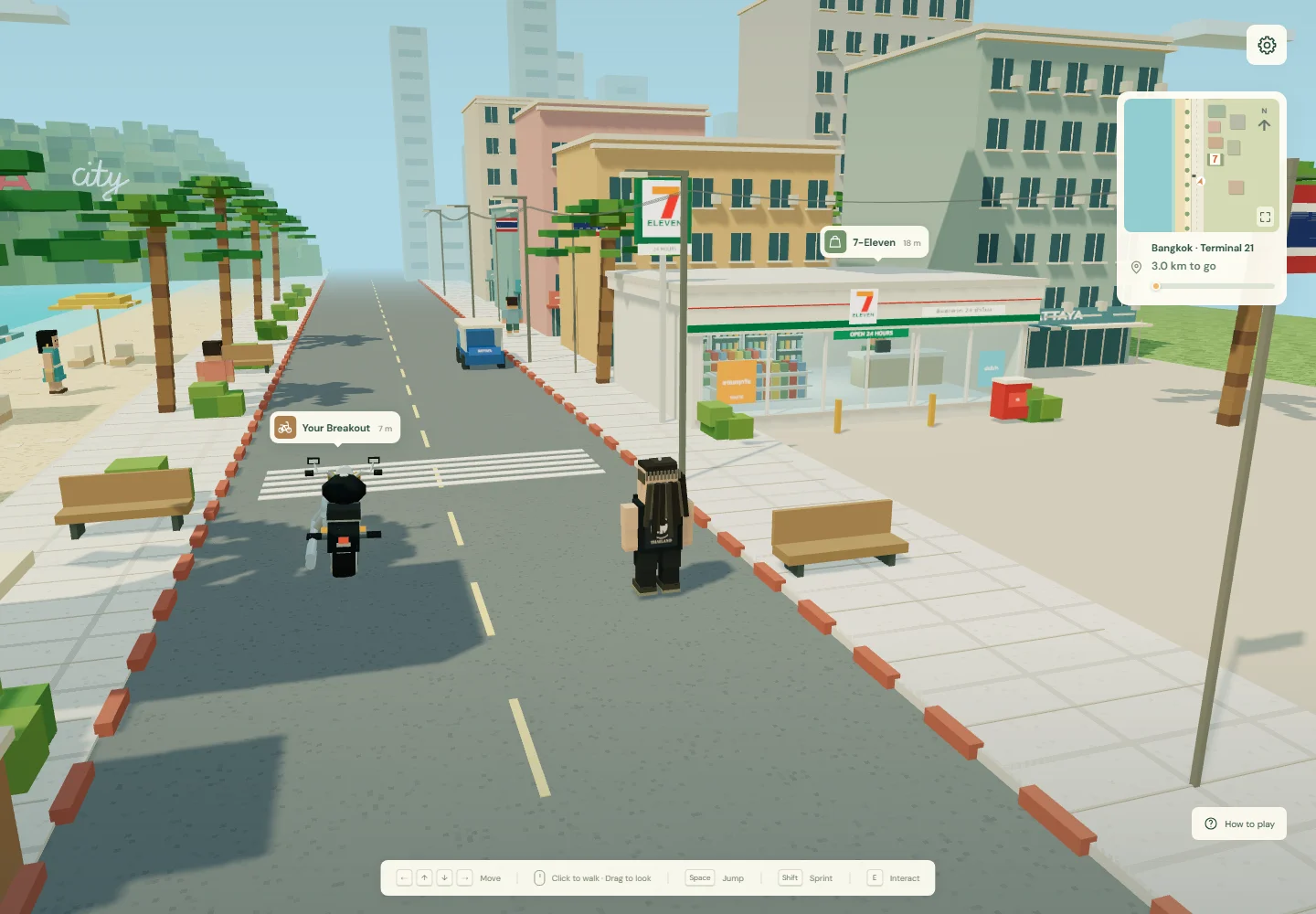
Pattaya → Bangkok: A Breakout road trip is a fun little vibe-coded browser game where you ride a motorbike from Pattaya to Terminal 21 in Asok. You can get off the bike and walk around, too, should the urge to behave like a pedestrian briefly overcome you.
Its summary of Bangkok? Terminal 21, Asok, a rest stop on the way back to Pattaya. Probably how most motorbike gangs see Bangkok.
Bangkok: City of Legends is in beta, with a free demo
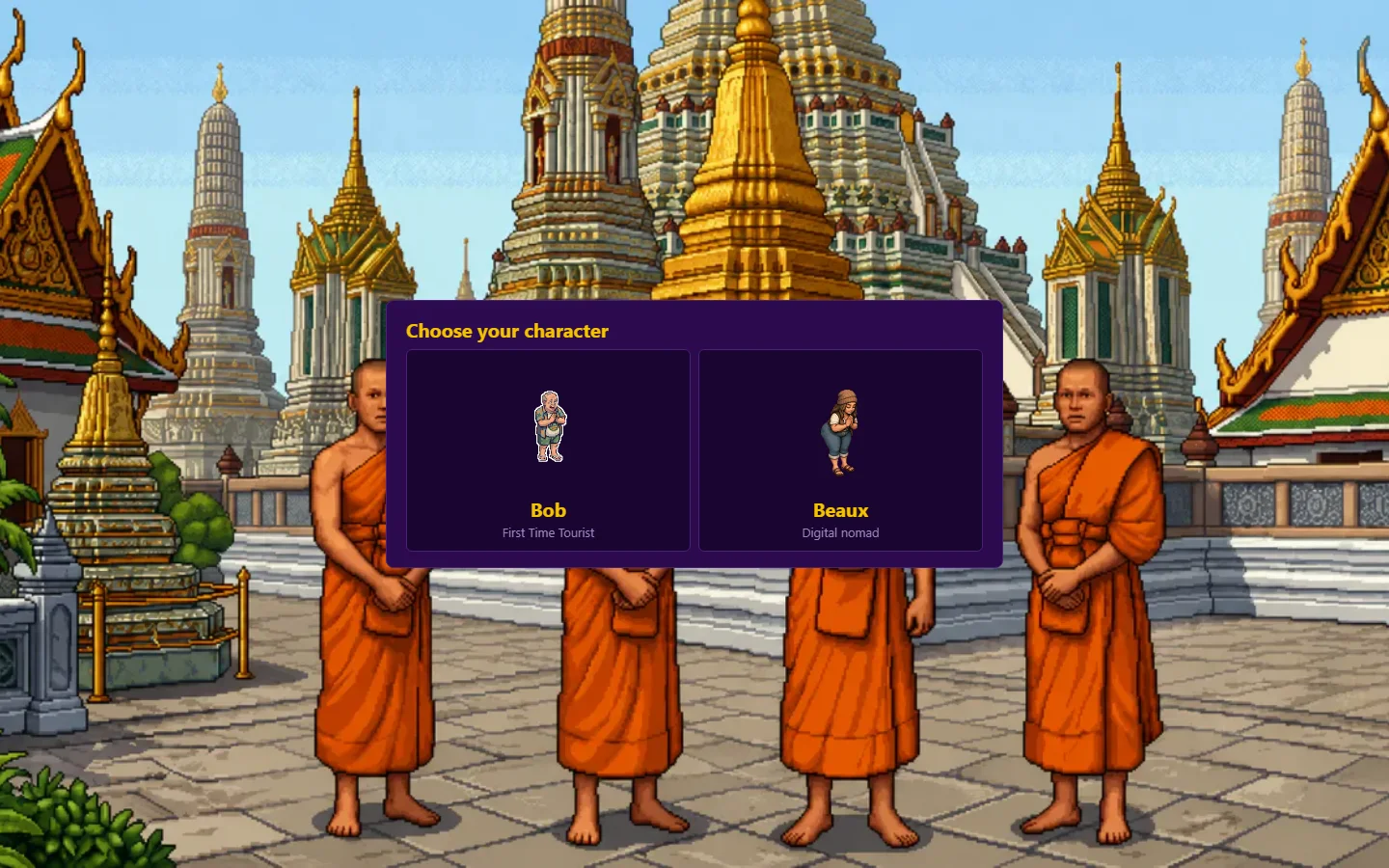
I researched this while making Bangkok: City of Legends, a browser RPG and visual novel where your choices shape the story, your stats, your relationships and your reputation.
The characters are voiced by comedians from Bangkok's comedy scene. The announced cast includes Eric, David Wor, Greg Andersen from Kill Tony, Chris Cooke, Gary Miller, Pissara Prang, Ian Harvey Stone, Paul Wallis, the Toothless Truth Teller, Taksina, Sarayumi and Warren Gerdes.
I have spent far too much time and money investing in Bangkok's comedy scene. This game is a continuation of that madness.
It is set in Bangkok as my love letter to this city. The game is now in beta, and the free demo is out. I am leaving the verdict on my own game to you. Reviewing it myself would be the equivalent of declaring yourself the winner of a pub quiz.
Play the free demo and tell me what you think.
Let me know if I've missed any games off the list.
For more games to play, try these free browser story games with no download.