
Vibe-coded games
The Top 9 Vibe Coded Games to Play in Your Browser
Nine browser games that show how far vibe coding has come in one year.
Vibe coding has come a ridiculous distance in one year. Last year's Vibe Jam had some pretty cringe slop. Most entries were demonstrations that it was possible to vibe code a game. Like you can drive with your feet, but is it a good idea?
This year's jam has genuinely playable games. Some are just copies (after all, that's what LLMs do best), and time was tight. But there are games here you'd genuinely want to play more than once, and some you'd even pay for. Vibe jammed in a month. Mostly by solo "devs". That is nuts.
WenWare was my favourite. It drops you into a historical scene and asks you to work out where you are and when it happened. Slingshot, which sends a tiny spacecraft bouncing around the solar system, was another one I found myself playing while waiting for my session tokens to reset.
Vibe Jam is a competition for games with at least 90% of their code written by AI. Some of these were very impressively hacked together in a month, but this list is about the best games, not the ones developed fastest. Which games actually gave players a reason to return?
AI use is common enough in game development that "made with AI" tells you very little. This list is purely for games that are proudly and publicly vibe coded. Their creators talk about how they made them, rather than hiding the AI like a shameful affair.
These nine browser games cover historical guessing, orbital flight, island warfare, fish keeping, a Bangkok RPG, squad combat, underwater horror, a classic-style MMO and a multiplayer town whose public lobby explains almost nothing. Some suit a short break. Inselnova and World of ClaudeCraft could become much longer commitments. Each has a link to play.
Choose your game
| Game | What you do | Useful to know |
|---|---|---|
| WenWare | Guess the place and date of historical scenes | Free solo play; some modes require sign-in |
| Slingshot | Use planetary flybys to escape the solar system | Free browser version; start with the tutorial |
| Inselnova | Build an island, trade, spy and command fleets | Free; persistent multiplayer; early access |
| Fishies | Raise fish and shape a small aquarium | Free guest play; alpha; sign in to keep your progress |
| Bangkok: City of Legends | Make choices, take quests and build a reputation in Bangkok | Free browser beta; voiced by Bangkok comedians |
| Boots & Bullets | Lead six soldiers through top-down firefights | Desktop browser; starts without an account; from Inselnova's developer |
| HALDANE-4 | Explore beneath Antarctic ice through an ASCII terminal | Free; horror; headphones and desktop recommended |
| World of ClaudeCraft | Quest, level and group up in a classic-style MMO | Free browser game; account required for the live world; no wallet needed |
| Clootsville | Start or join a multiplayer town | Username and password required; rules are not public yet |
1. WenWare
Made by @underpaid_mom.
WenWare takes the familiar GeoGuessr idea and adds a second way to be wrong. Recognising the country helps. You still have to decide which century you have landed in.
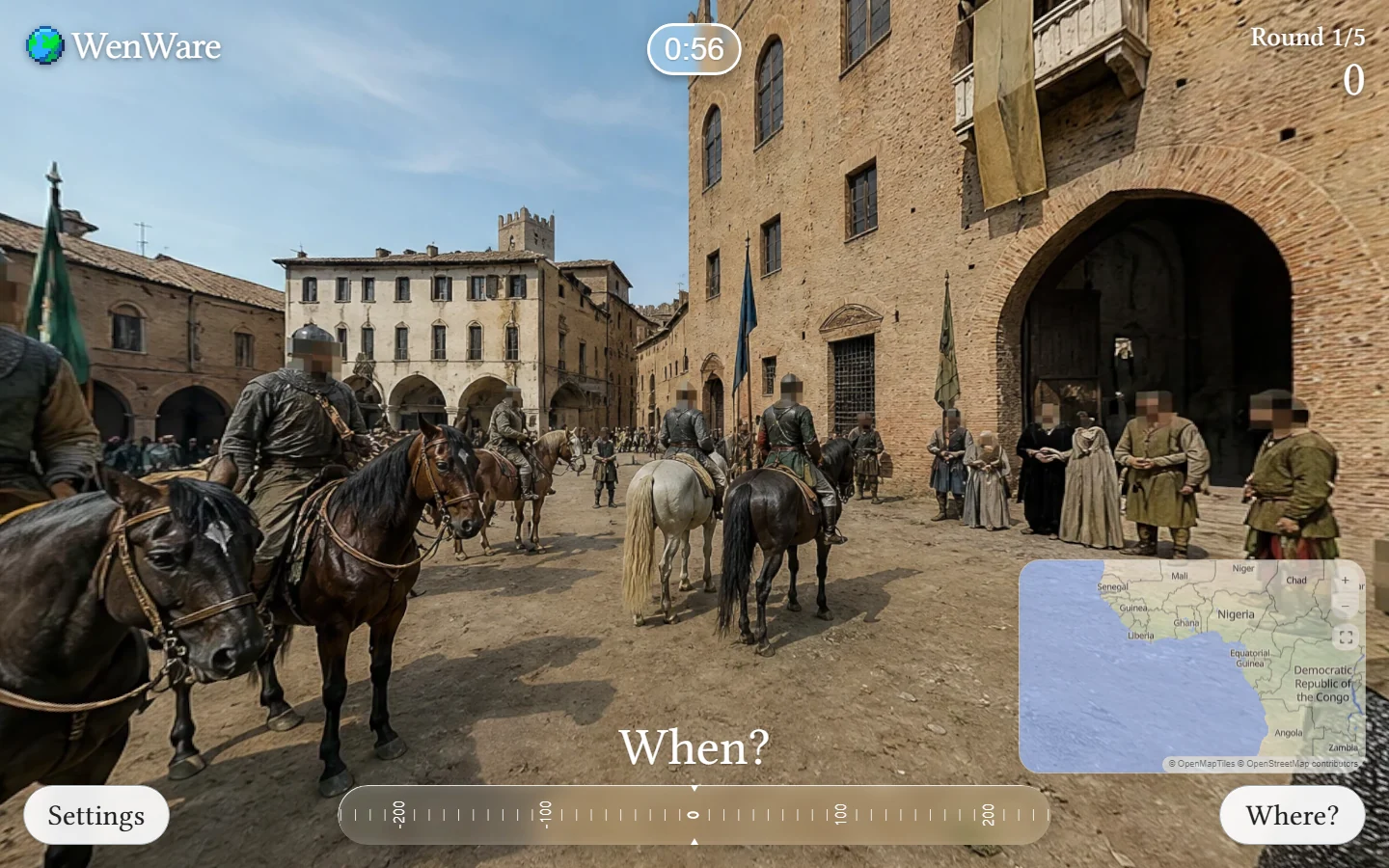
You look around a 360-degree scene, examine the buildings, clothing and landscape, then place your guess on a map and timeline. The answer reveals the historical moment and links to a reference article. It gives you a reason to look closely at things you might otherwise scroll past. WenWare's guide to the game explains the setup.
The current version has daily rounds, ordinary solo play, multiplayer and an Atlas for exploring scenes without following a conventional round. That makes it worth revisiting even after you understand the basic trick. It also did well with the judges: third place in Vibe Jam 2026, plus Bolt's Most Played award. The official results list both.
Solo play is free and can be started without an account. Party and ranked modes ask you to sign in. The paid plans cover tools for generating your own panoramas.
Treat the scenes as historical reconstructions. Generated details can be wrong, and the game itself acknowledges that limitation. Follow the reference links when a scene makes you curious.
The creator has also linked a new game from WenWare's homepage: 3D Artifact. It asks you to guess the origin and era of museum objects. That's a useful next stop if the history guessing is what you enjoyed; it is a separate follow-up, with less development evidence available so far.
2. Slingshot: Escape the Solar System
Made by Romain Simon.
Slingshot gives you a small spacecraft, limited fuel and a solar system full of things to crash into. You time engine burns and use close passes around planets to build speed, eventually trying to escape the system.
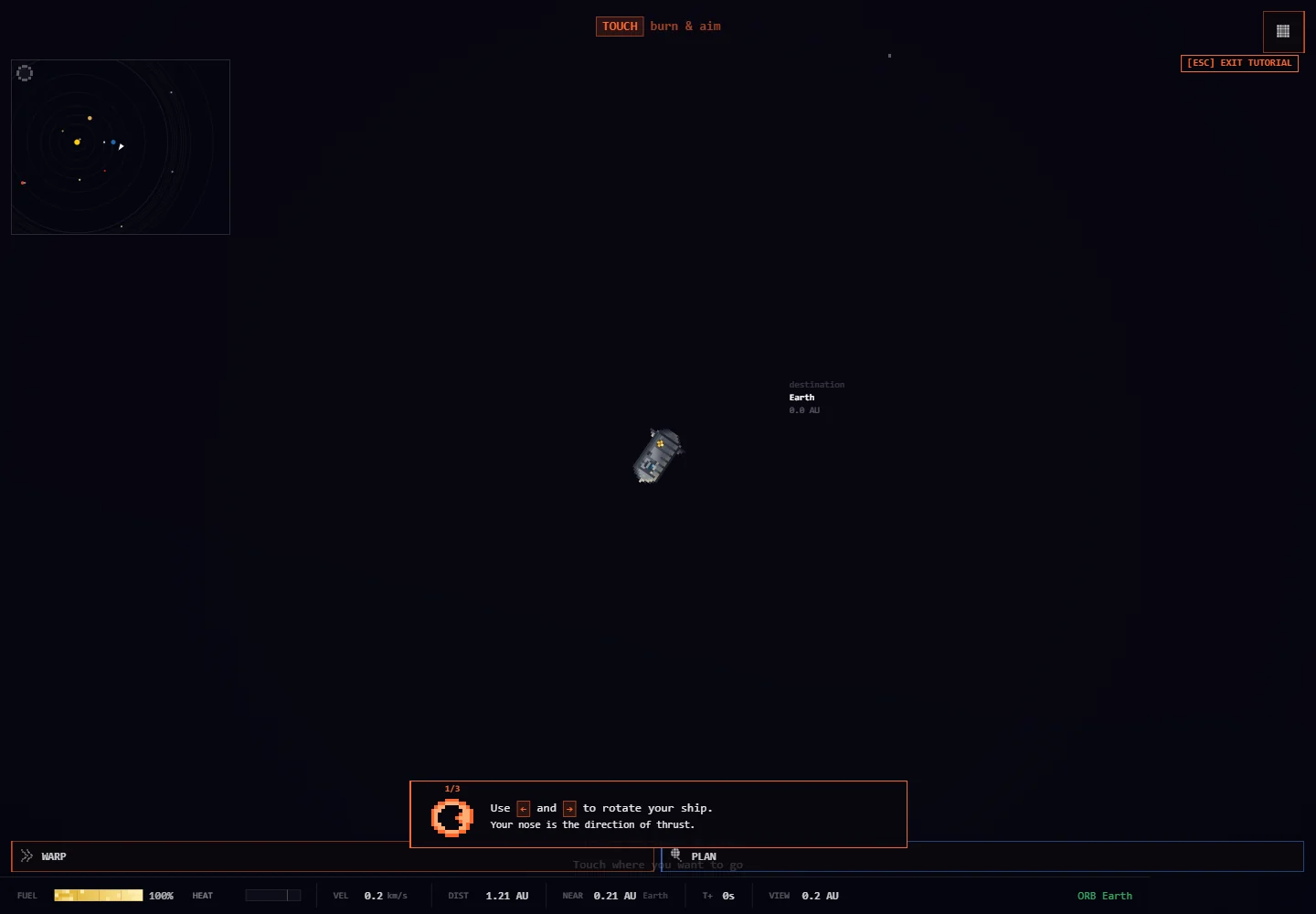
The attraction is learning to read a route. A small adjustment can change where you end up, so there is more to do than hold the thrust button and hope. You can pause to plan, then try to make the next flyby useful. Upgrades carry between runs, and reaching new destinations unlocks music in the game's Spacify player. The official wiki covers the controls and progression, with later discoveries hidden behind spoiler warnings.
Start with the tutorial. It introduces steering, burning and a flyby around Earth before you spend too much time conducting expensive-looking experiments in the wrong direction.
Slingshot is also one of the clearest examples here of development continuing. The live game's Options screen shows an August 2026 build. Romain's portfolio now includes SpaceSim, a solar-system explorer listed as a July 2026 work in progress.
I thought Slingshot got overlooked in the jam results. Maybe it is a copy of something obvious to people who know the genre better than I do. I don't know. I played it, liked it and thought it deserved more attention.
You can play Slingshot in the browser now. Its Steam page is still marked Coming soon, so the store listing should not be mistaken for a released download. That page also explicitly credits AI tools for the game's code, visuals and audio.
3. Inselnova
Made by Darren Moore.
Inselnova is the choice for a game you can keep coming back to. You govern an island, develop its economy, research technologies and build fleets. Other players occupy the same persistent world, giving you people to trade with, ally with, spy on or attack. Construction and voyages continue while you are away. The official introduction describes its slower pace.
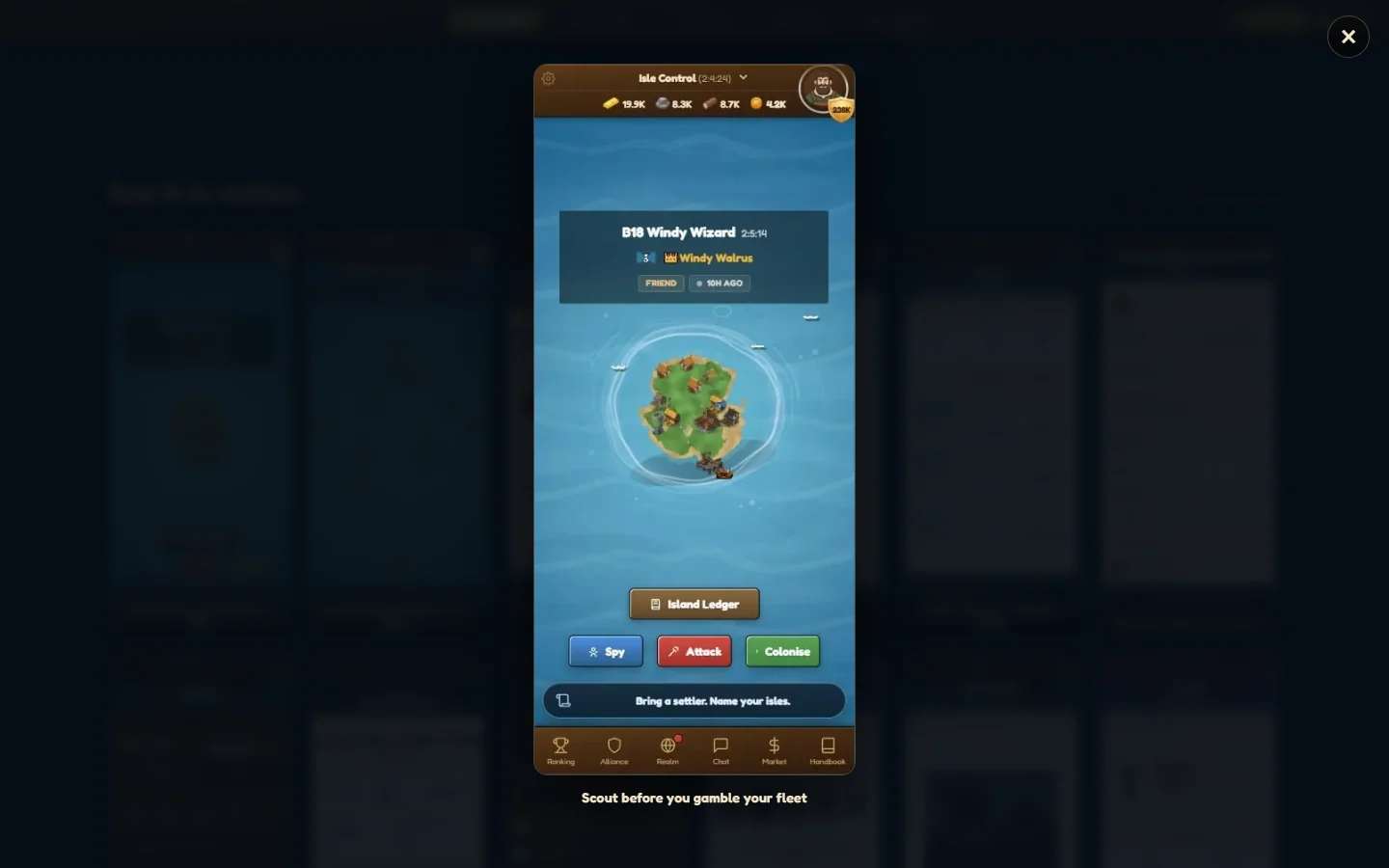
It draws on Inselkampf, the older browser strategy game, and puts the emphasis on decisions that develop over time. You can spend a short session arranging what happens next, then return later to see the results. The developer's current policy rules out buying competitive power; the game is free.
There is unusually good evidence of work continuing here. The 4 September 2026 update changes automated trade routes, improves the information you receive after being plundered and updates how islands look in the water. These are the kinds of changes that matter once people are living with a game.
I know Darren and gave early feedback on Inselnova's lore and messages. In his development account, he credits me with pushing the idea that "failure should be entertaining." Failed spy missions and attacks needed some personality alongside the statistics. Losing a fleet should at least produce a decent story.
Darren publicly describes his approach as blind coding, using AI to implement work within a deliberate process of specifications and tests. He is an experienced programmer who also worked on the frontend himself. He explains the process openly; we should be equally precise about what he says he built and how. Inselnova is not an established Vibe Jam entrant.
It remains in early access. The guest entry currently includes a human-verification puzzle before you can begin.
4. Fishies
Fishies puts a small aquarium in your browser and lets it keep changing while you are away. You can enter as a guest, place your first egg and watch a baby Coral Clownfish hatch before the feeding tutorial begins.
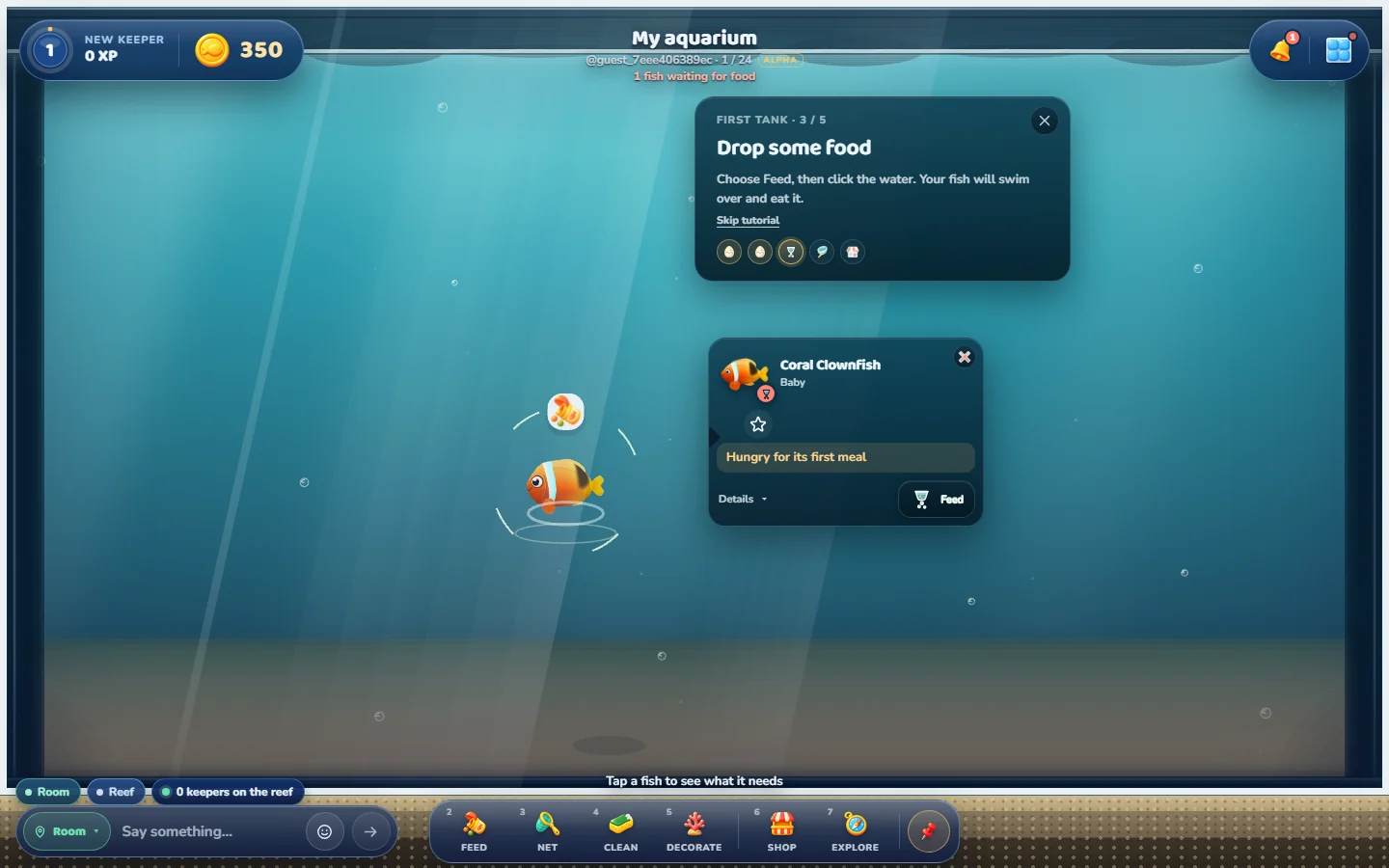
From there, you feed fish, clean the tank, add decorations and open the reef to explore. The current alpha lists 16 species. It is a gentler commitment than most persistent browser games, although neglecting a living aquarium may create a very specific kind of guilt.
Guest play starts without an account. Sign-in options are available if you want your aquarium to follow you between visits.
5. Bangkok: City of Legends
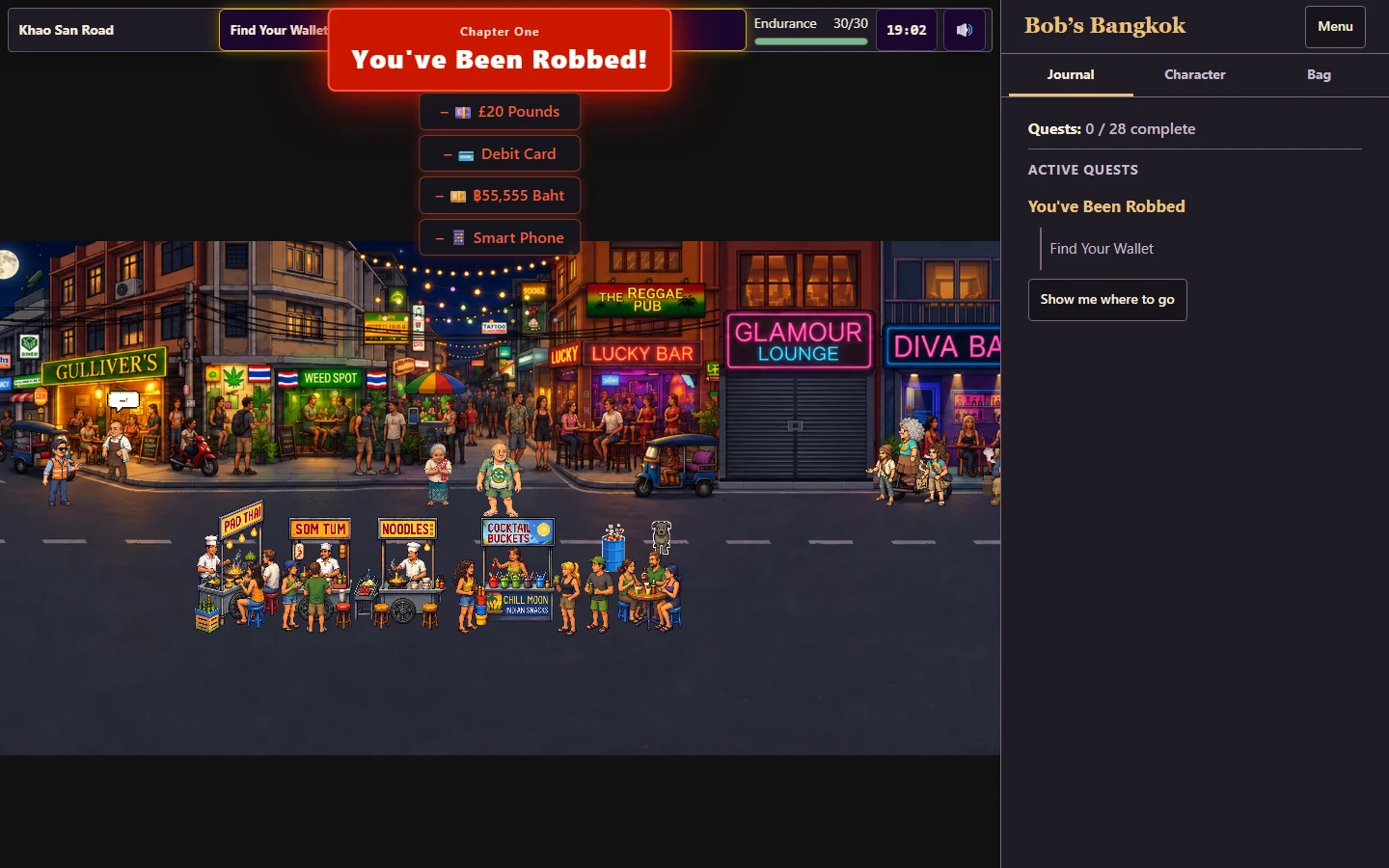
I am making Bangkok: City of Legends, a browser RPG and visual novel set in Bangkok. You choose between Bob and Beaux, then make decisions that change your stats, relationships, reputation and route through the story.
The game has dialogue choices, quests, factions and different endings. Comedians from Bangkok's scene voice the cast, which is how a vibe-coded games article ended up living on a comedy website in the first place.
It is still a public beta, and putting my own unfinished game in a ranked list is not exactly independent criticism. I have put it above Boots & Bullets because I think it is better. You are welcome to test my judgement.
6. Boots & Bullets
Made by Darren Moore, the developer behind Inselnova, under IMBF Games.
Boots & Bullets gives Darren's soldiers a more immediate problem than waiting for a fleet to arrive. This is a top-down squad shooter inspired by Cannon Fodder: six men, each one a single hit away from trouble, and Major Trumper providing military wisdom of questionable value.
The opening mission, Basic Training, sends you into the jungle to clear out the enemy. You choose Rookie, Veteran or Elite difficulty before deploying. Your squad members have names, which makes the instruction to keep them alive feel a little more personal than protecting six interchangeable health bars.
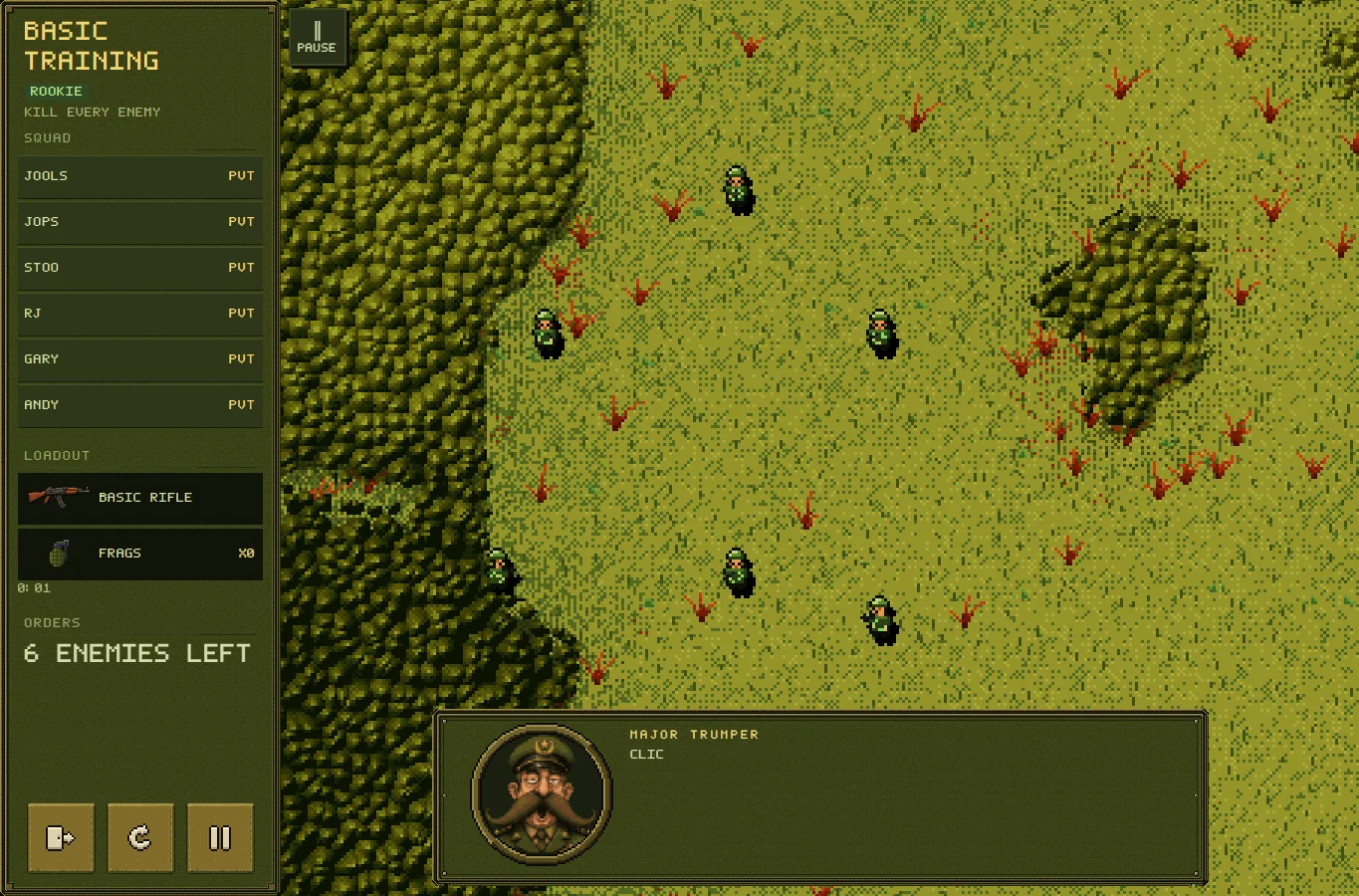
The humour starts on the loading screen, where the Major treats the people inside wooden huts as somebody else's administrative concern. If you liked the personality in Inselnova's reports, this is another place to find that streak of military absurdity.
You can start the first mission in a desktop browser without creating an account. The menu also offers map selection, an armoury and multiplayer; phone visitors are directed to a desktop. IMBF's studio page lists both games and openly describes the studio as AI-native.
7. HALDANE-4
Made by Denis Bondare.
HALDANE-4 is a short horror game about descending beneath the Antarctic ice shelf. Its world appears through an ASCII terminal, with characters forming the view ahead of your submersible.
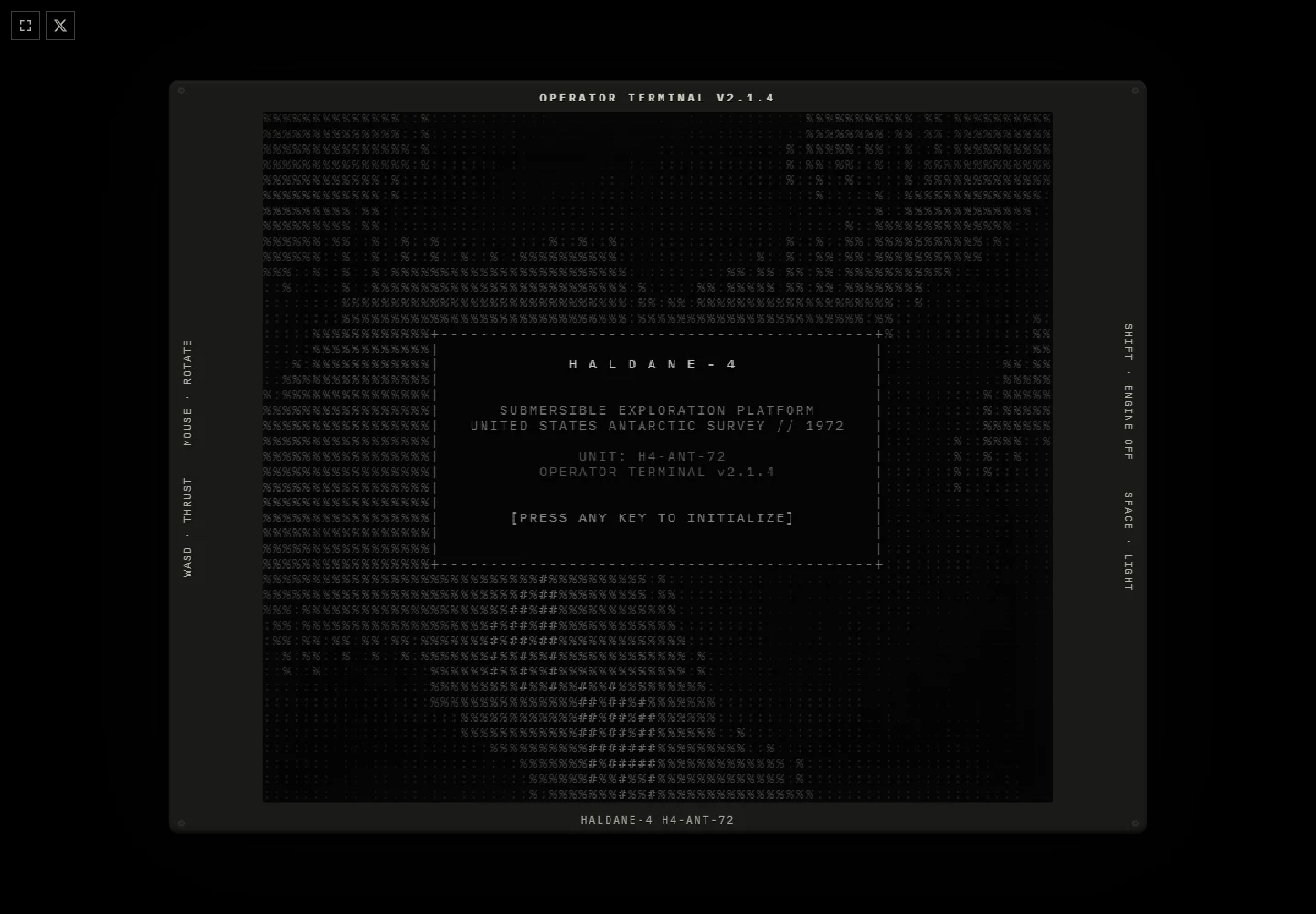
That restricted view is a good fit for underwater horror. The controls let you thrust, rotate, cut the engine and use a light; the sparse display gives you less information than you might want about your surroundings. The game recommends headphones and a desktop.
It received Cursor's Most Original award in the 2026 jam. Give it a look if you are more interested in atmosphere and a short story than another open-world prototype. The opening is best approached without reading a description of what happens later.
8. World of ClaudeCraft
Made by Levy Street.
World of ClaudeCraft is a classic-style MMO that runs in a browser. You create a character, choose from nine familiar classes and enter a shared world built around quests, levelling, loot and group combat.
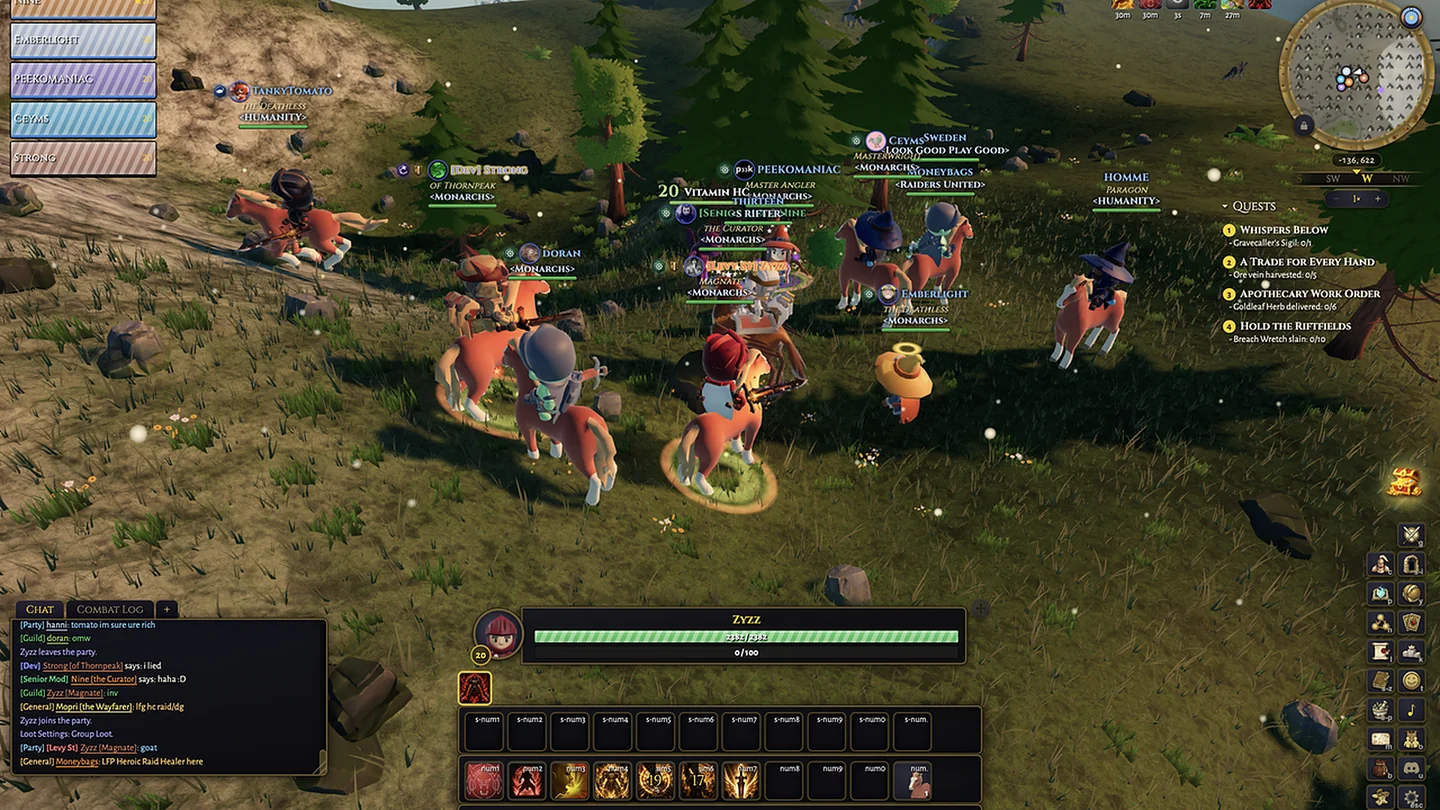
This is much larger than the name first suggests. The official guide lists 15 zones, five-player dungeons, a ten-player raid, PvP arenas, professions, trading, mounts and a level cap of 20. The world can be played solo, but the better loot sits behind group content.
The clue about how it was made is in the name. Its public source repository also includes agent instructions and tooling for Claude and Codex. The code is open source, and development is active enough for the repository to have accumulated more than 15,000 commits by 9 September 2026.
You need an account for the live shared world. The game also has an optional Solana token and wallet features, but the developers say you can play without connecting a wallet and that purchases do not grant combat power.
9. Clootsville
Clootsville is the newest and least documented game here. Its opening screen gives you a logo and a button marked "Click to Start." After that, you choose a username and enter a multiplayer lobby.
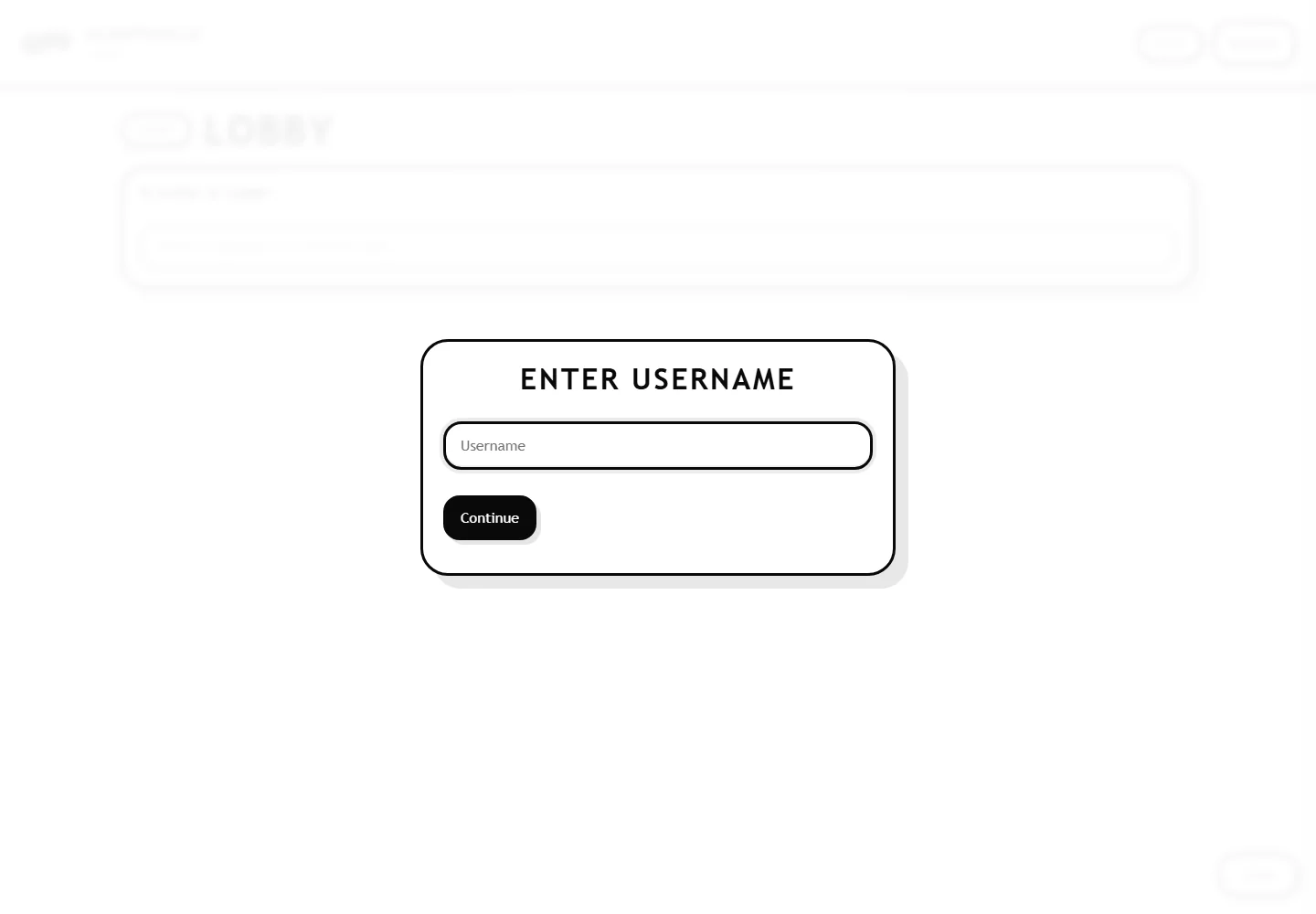
The lobby lets you start a city or join one hosted by another player. City hosts can invite players, everybody can mark themselves ready, and the group launches the game together. That is as far as the public pages let you look without creating an account.
Putting Clootsville ninth is provisional. There is no public guide, about page or source link yet, and the landing page does not explain what players do after their city launches. The mysterious entrance works better once somebody has told you why you should go through it.
For more games built around writing and characters, see The Best Stories in Games You Can Play for Free.